Choosing the right manufacturing planning software can mean the difference between hitting delivery dates and explaining to your best customer why their order is three weeks late. For midsize manufacturers, the stakes are even higher, you’re juggling complex production schedules, fluctuating demand, and tight margins without the massive IT teams that enterprise-level competitors rely on. The software you pick needs to work as hard as you do.
Most midsize firms reach a breaking point where spreadsheets and disconnected systems start costing real money, in missed shipments, excess inventory, or production bottlenecks that nobody saw coming. The right planning tool gives you visibility into your entire production pipeline, from raw materials to finished goods. It connects demand forecasts to shop floor schedules so your team can make decisions based on data, not guesswork.
At Concentrus, we implement and optimize NetSuite and Acumatica ERP systems for midsize companies, and manufacturing planning is one of the most critical modules we help clients get right. We built this list based on what we’ve seen work in practice, not vendor marketing decks. Below, you’ll find 11 manufacturing planning software options worth evaluating, with honest breakdowns of their strengths, limitations, and best-fit scenarios.
1. Concentrus ROI Roadmap for NetSuite and Acumatica
Most manufacturing planning software implementations fail not because the technology is wrong, but because the rollout never ties the system to measurable financial outcomes. Concentrus addresses that gap directly with its proprietary ROI Roadmap™ methodology, which connects every ERP configuration decision to the KPIs that actually matter to your finance team.
What it is and how it plans manufacturing
The Concentrus ROI Roadmap™ is a structured implementation and optimization framework built around NetSuite and Acumatica, two of the strongest cloud ERP platforms for midsize manufacturers. Rather than simply switching on modules and walking away, Concentrus maps your production planning requirements to specific system configurations and then builds tracking mechanisms that show you whether those configurations are delivering results.
The methodology treats ERP implementation as a financial project first, and a technology project second, which is exactly the approach your CFO wants to see.
Both NetSuite and Acumatica cover core manufacturing planning functions including MRP, work orders, production scheduling, and inventory management. Concentrus layers its ROI Roadmap™ on top to ensure those functions are configured against your real operational goals.
Best fit and ideal company profile
This approach fits midsize manufacturers with annual revenue between $10M and $250M who either need a new ERP implementation or are trying to recover value from an existing one that hasn’t delivered. Companies in manufacturing, wholesale distribution, and automotive supply chains get the most out of this model.
Strengths for midsize teams
Your team gets a partner who understands both the platform and your financial targets, not just a vendor selling licenses. Concentrus brings implementation expertise, change management support, and ongoing optimization so the system grows with your operation. The ROI Roadmap™ also gives your CFO clear visibility into ROI milestones at every phase, which removes a lot of the uncertainty that derails ERP projects.
Pricing and implementation notes
Concentrus works on project-based engagements scoped to your specific needs. Pricing varies based on the complexity of your manufacturing processes, the number of users, and whether you’re starting fresh or rescuing an existing implementation. Contact Concentrus directly for a scoped estimate tied to your ROI targets.
2. NetSuite Manufacturing
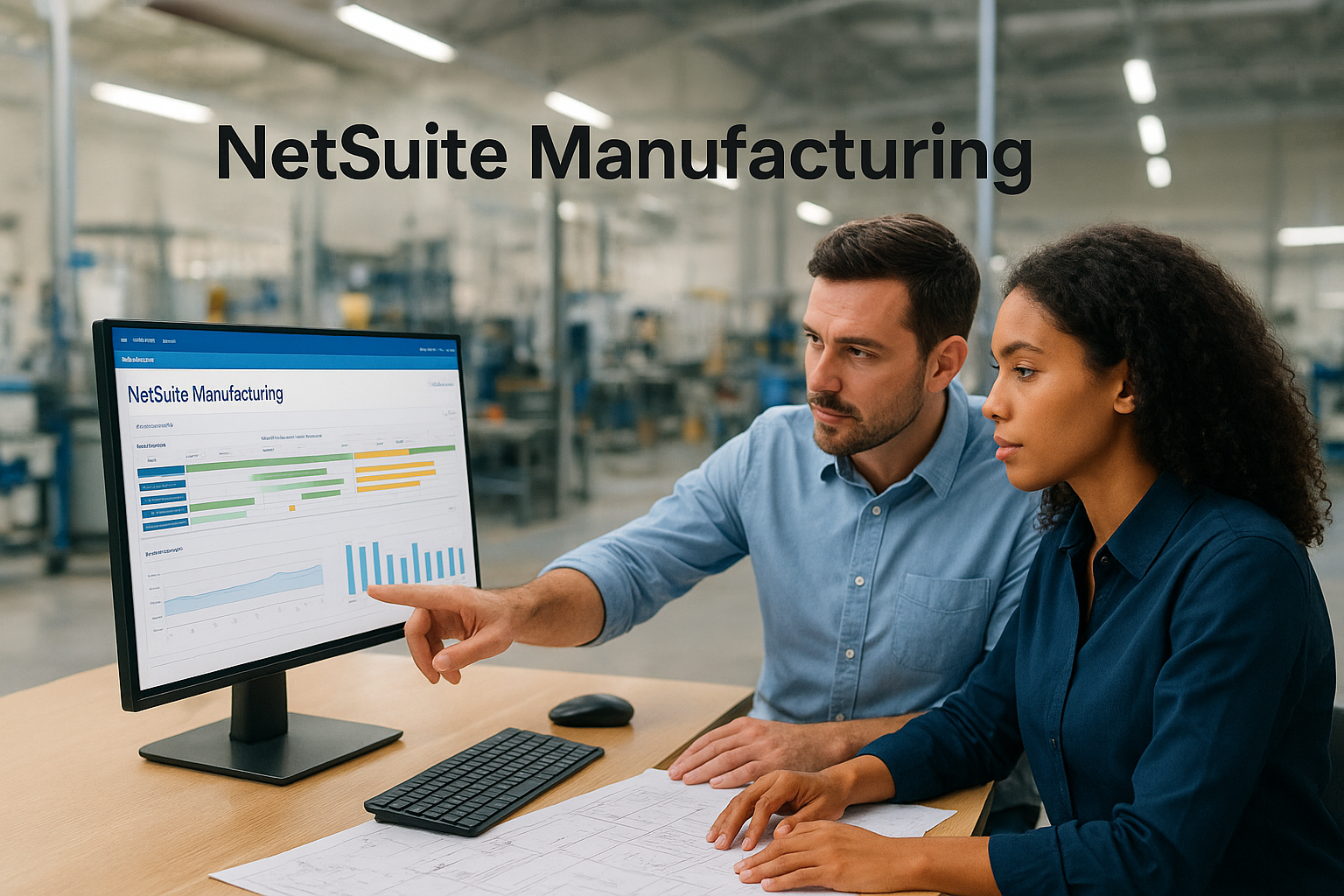
NetSuite Manufacturing is Oracle’s cloud-based ERP module built to handle the full production lifecycle, from demand planning through shop floor execution. It sits inside the broader NetSuite ERP platform, which means your finance, inventory, and manufacturing planning software functions all run in one connected system rather than across separate tools.
What it is and how it plans manufacturing
NetSuite Manufacturing covers material requirements planning (MRP), work order management, production scheduling, and routing, giving your operations team a single place to manage demand signals, material availability, and capacity constraints. The system pulls live data across sales orders and inventory to generate production schedules that reflect actual demand rather than outdated forecasts.
When your planning engine and your financials share the same database, you eliminate the manual reconciliation that causes costly production errors.
Best fit and ideal company profile
NetSuite Manufacturing fits midsize companies running discrete or process manufacturing with revenues roughly between $10M and $200M. It works especially well for firms that want a unified platform covering accounting, CRM, and production without stitching together multiple vendors.
Strengths for midsize teams
Your team benefits from real-time visibility across the production pipeline without investing in separate planning tools. Native integration between manufacturing, procurement, and financials means your CFO gets accurate cost data without waiting for manual uploads.
Pricing and implementation notes
NetSuite uses annual license pricing based on user count and modules, with implementation costs varying significantly depending on your process complexity. Budget for a qualified implementation partner to avoid common configuration mistakes.
3. Acumatica Manufacturing Edition
Acumatica Manufacturing Edition is a cloud-based ERP platform designed specifically for midsize manufacturers who need tight coordination between production, inventory, and financials. It runs on a consumption-based licensing model, which sets it apart from most competitors in the manufacturing planning software space.
What it is and how it plans manufacturing
Acumatica covers material requirements planning (MRP), production order management, capacity planning, and advanced inventory control within a single connected platform. The system links your sales orders directly to production schedules, so your team can see material shortages and capacity gaps before they become missed shipments.
When your production planning and financial reporting live in the same system, your CFO gets accurate cost data without chasing down manual exports.
Best fit and ideal company profile
Acumatica fits midsize discrete and process manufacturers with revenues between $10M and $150M who want a platform that scales without forcing you to pay per-user license fees as your headcount grows. It works particularly well for companies with multiple warehouses or production sites that need real-time visibility across locations.
Strengths for midsize teams
Your team benefits from open API architecture that connects easily with third-party tools for e-commerce, payroll, or warehouse management. Acumatica also offers strong mobile access, so your shop floor supervisors can update work orders and check inventory from the floor without being tied to a desktop.
Pricing and implementation notes
Acumatica prices by resource consumption rather than named users, which lowers the barrier for growing teams. Implementation costs depend on your module count and process complexity, so work with a certified partner to scope the project accurately.
4. SAP S/4HANA Manufacturing
SAP S/4HANA Manufacturing is the production planning and execution module within SAP’s flagship cloud ERP suite. It represents SAP’s most current architecture, built on an in-memory database that processes large volumes of operational data faster than its predecessor, SAP ECC.
What it is and how it plans manufacturing
SAP S/4HANA handles demand-driven replenishment, production scheduling, MRP, and shop floor control within a fully integrated ERP environment. The system connects your sales forecasts, procurement, and production orders in real time, so planners can react to demand shifts without waiting for overnight batch runs.
Real-time MRP processing means your team catches material shortfalls before they stop a production line, not after.
Best fit and ideal company profile
SAP S/4HANA targets larger midsize and enterprise manufacturers with revenues typically above $150M. Companies running complex, multi-plant discrete or process manufacturing with global supply chains get the most from the platform’s depth.
Strengths for midsize teams
Your team gets one of the most feature-complete manufacturing planning software platforms on the market, covering everything from advanced planning and scheduling to quality management and asset maintenance. SAP’s ecosystem also offers extensive third-party integrations and a large talent pool of consultants.
Pricing and implementation notes
SAP S/4HANA carries significant licensing and implementation costs that often run into the millions for midsize firms. Implementation timelines typically range from 12 to 24 months, and you will need experienced SAP partners to manage the project scope and avoid budget overruns.
5. Microsoft Dynamics 365 Supply Chain Management
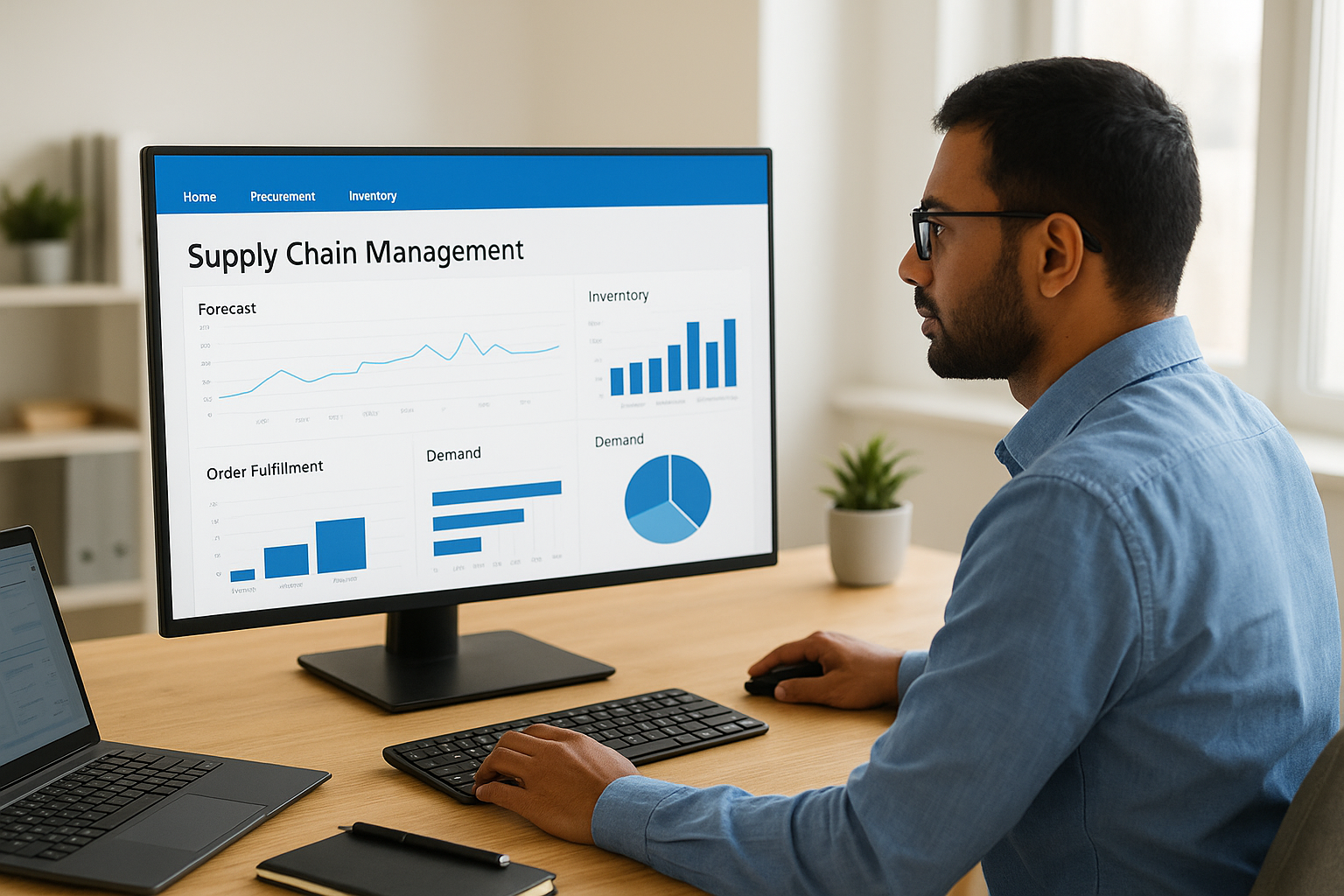
Microsoft Dynamics 365 Supply Chain Management is a cloud-based ERP module that handles production planning, procurement, and inventory within Microsoft’s broader Dynamics 365 platform. It connects directly with other Dynamics 365 apps, including Finance and Commerce, which gives you a unified view across your business operations.
What it is and how it plans manufacturing
Dynamics 365 Supply Chain Management covers master planning, production scheduling, MRP, warehouse management, and demand forecasting within a single platform. The system uses real-time data to generate production schedules that account for material availability, capacity, and supplier lead times simultaneously.
Connecting your demand forecasts directly to production orders removes the manual handoffs that create planning errors and delays.
Best fit and ideal company profile
This platform fits midsize to larger manufacturers with revenues above $50M who already run Microsoft tools like Azure, Office 365, or Power BI. Companies in discrete manufacturing, distribution, and automotive supply chains tend to get the most value because of the platform’s deep integration with Microsoft’s analytics ecosystem.
Strengths for midsize teams
Your team benefits from native Power BI integration that turns manufacturing planning software data into visual dashboards without additional reporting tools. The platform also connects with Microsoft Teams, so your production planners and procurement staff can collaborate on scheduling issues without switching between applications.
Pricing and implementation notes
Microsoft prices Dynamics 365 Supply Chain Management on a per-user, per-month subscription model, with implementation costs varying based on module count and customization needs. Plan for a certified Microsoft partner to manage the rollout and keep the project on schedule.
6. Epicor Kinetic
Epicor Kinetic is a cloud-native ERP platform built specifically for manufacturers, with decades of industry-focused development behind it. Unlike general-purpose ERP systems that add manufacturing as an afterthought, Epicor treats production planning as a core function rather than a bolted-on module.
What it is and how it plans manufacturing
Epicor Kinetic delivers production scheduling, MRP, job management, and capacity planning within a single manufacturing-focused environment. The system links your sales orders, material requirements, and shop floor capacity so your planners can build accurate schedules that account for real constraints before a job hits the floor.
When your scheduling engine knows your actual machine capacity and material availability simultaneously, you stop promising delivery dates you cannot meet.
Best fit and ideal company profile
Epicor Kinetic fits midsize discrete manufacturers with revenues between $20M and $300M, particularly in industrial equipment, electronics, and metal fabrication. Companies running high-mix, low-volume production with complex routings tend to get the most value from the platform’s job costing and scheduling depth.
Strengths for midsize teams
Your team benefits from manufacturing-specific workflows that require less customization than general ERP platforms to match how production facilities actually operate. Epicor also offers strong job costing and real-time shop floor data collection, which gives your CFO accurate cost reporting without manual data entry from supervisors.
Pricing and implementation notes
Epicor Kinetic uses subscription-based pricing tied to user count and modules selected. Implementation timelines typically run 6 to 18 months depending on process complexity, and working with a certified Epicor partner keeps your manufacturing planning software rollout on track and on budget.
7. Infor CloudSuite Industrial
Infor CloudSuite Industrial (formerly SyteLine) is a cloud-based ERP platform built for complex manufacturers who need deep production planning capabilities without the overhead of an enterprise-scale system. It carries decades of industry-specific development focused on manufacturing workflows rather than general business functions.
What it is and how it plans manufacturing
Infor CloudSuite Industrial covers advanced scheduling, MRP, production order management, and finite capacity planning within a single connected environment. The system uses constraint-based scheduling to build production sequences that reflect your actual shop floor capacity, material availability, and lead times simultaneously.
When your scheduling engine accounts for real constraints from the start, your team stops building plans that fall apart the moment a machine goes offline.
Best fit and ideal company profile
This platform fits midsize to upper-midsize manufacturers with revenues between $50M and $500M, particularly in industrial equipment, aerospace components, and process manufacturing sectors like chemicals or food production. Companies running mixed-mode manufacturing with both discrete and process requirements get strong value from the platform’s flexible production models.
Strengths for midsize teams
Your team benefits from built-in industry-specific workflows that reduce customization time compared to general ERP platforms. Infor also provides strong quality management and compliance tracking natively, which matters if your manufacturing operation serves regulated industries like medical devices or defense.
Pricing and implementation notes
Infor CloudSuite Industrial uses subscription-based pricing scoped by modules and user count. Implementation timelines typically run 9 to 18 months, and partnering with a certified Infor consultant keeps your manufacturing planning software deployment on track.
8. IFS Cloud
IFS Cloud is an enterprise-grade ERP and asset management platform with strong manufacturing planning capabilities built natively into its core. The platform has a long track record in asset-intensive and project-driven industries where production complexity goes beyond standard discrete or process manufacturing models.
What it is and how it plans manufacturing
IFS Cloud handles production scheduling, MRP, demand planning, and work order management within a unified platform that also covers field service and asset lifecycle management. Your planning team gets visibility across demand signals, material availability, and capacity constraints in a single environment, so production schedules reflect real operational limits before work orders are released.
When your manufacturing planning software connects production planning with asset maintenance, you avoid the unplanned downtime that turns accurate schedules into missed shipments.
Best fit and ideal company profile
IFS Cloud fits midsize to larger manufacturers with revenues above $75M, especially in aerospace, defense, energy equipment, and project-based manufacturing environments where each production run has unique engineering or regulatory requirements. Companies managing complex service operations alongside manufacturing get particular value from the platform’s integrated field service module.
Strengths for midsize teams
Your team benefits from strong project manufacturing capabilities that most general ERP platforms do not cover natively. IFS also delivers solid maintenance and asset management tools in the same system, which reduces the need for separate CMMS software.
Pricing and implementation notes
IFS Cloud uses subscription-based pricing scoped to your modules and user count. Implementation timelines typically run 9 to 18 months depending on process complexity.
9. DELMIAWorks
DELMIAWorks, formerly IQMS, is a shop floor-driven ERP platform from Dassault Systèmes built specifically for discrete manufacturers. It combines production planning, real-time monitoring, and financial management in a single system designed around how manufacturing plants actually operate, not how generic ERP vendors assume they do.
What it is and how it plans manufacturing
DELMIAWorks covers MRP, production scheduling, capacity planning, and real-time machine monitoring within one connected environment. The platform pulls live data directly from your equipment, so your production schedules reflect what is actually happening on the shop floor rather than what was entered manually hours earlier.
When your manufacturing planning software connects directly to your machines, you stop making scheduling decisions based on stale data.
Best fit and ideal company profile
This platform fits midsize discrete manufacturers with revenues between $20M and $200M, particularly in plastics injection molding, automotive components, and high-volume repetitive production environments where machine utilization and cycle times drive profitability.
Strengths for midsize teams
Your team benefits from native machine connectivity and real-time OEE tracking that most general ERP platforms require third-party tools to achieve. DELMIAWorks also delivers strong quality management and traceability features natively, which matters if your customers require part-level documentation or your operation serves the automotive supply chain.
Pricing and implementation notes
DELMIAWorks uses subscription-based pricing scoped by modules and user count. Implementation timelines typically run 6 to 12 months, and working with a certified partner helps you configure the platform to match your specific production model.
10. Plex Smart Manufacturing Platform
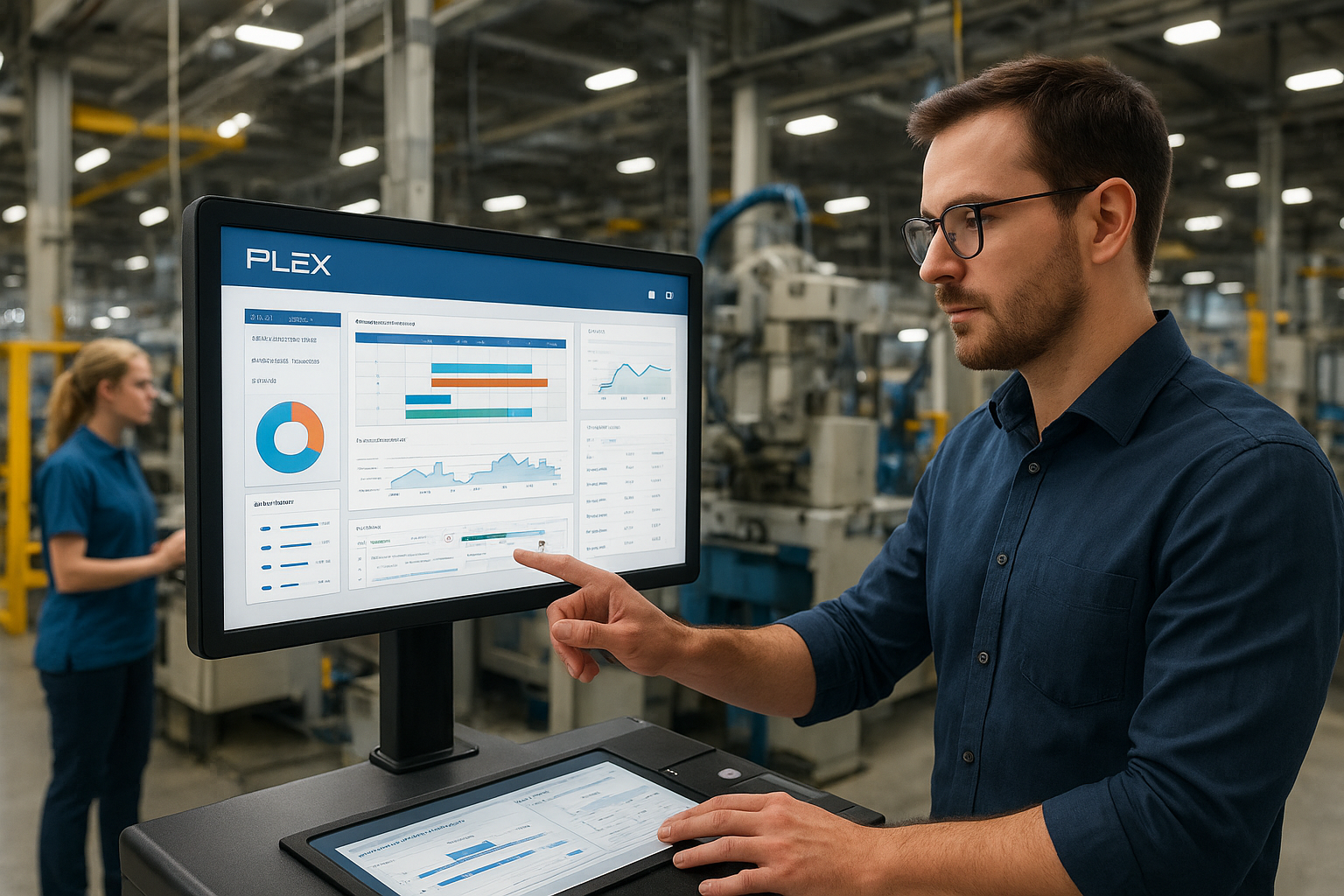
Plex Smart Manufacturing Platform is a cloud-native MES and ERP hybrid from Rockwell Automation built for manufacturers who need both production execution and planning in a single connected environment. Unlike traditional ERP systems that treat the shop floor as secondary, Plex puts production operations at the center of its design rather than layering them on top of a finance-first architecture.
What it is and how it plans manufacturing
Plex covers production scheduling, MRP, quality management, and real-time shop floor tracking within one platform. The system collects live data from your production lines and feeds it directly into your planning engine, so your schedules reflect what is actually happening on the floor rather than what was entered manually at shift end.
When your manufacturing planning software runs on live production data, your team catches scheduling conflicts before they cause late orders, not after.
Best fit and ideal company profile
Plex fits midsize to upper-midsize manufacturers with revenues between $50M and $500M, particularly in automotive supply chain, food and beverage, and high-volume repetitive production environments where traceability and compliance documentation are non-negotiable customer requirements.
Strengths for midsize teams
Your team gets native MES capabilities alongside ERP planning functions, which eliminates the integration costs that come with running a separate shop floor system. Plex also delivers strong quality and compliance tracking that satisfies automotive customer requirements without additional third-party configuration.
Pricing and implementation notes
Plex uses subscription-based pricing scoped by modules and user count. Implementation timelines typically run 6 to 12 months depending on your production complexity and site count.
11. Katana MRP
Katana MRP is a cloud-based manufacturing planning software built for small to midsize manufacturers who need production visibility without the complexity or cost of a full ERP system. It focuses on giving growing product companies real-time inventory and production control through a clean interface that your team can actually learn without months of training.
What it is and how it plans manufacturing
Katana handles material requirements planning, production order management, and live inventory tracking in one connected environment. The platform automatically prioritizes your production orders based on demand signals, flags material shortages before they stall a production run, and updates stock levels in real time as materials move through the shop floor.
When your planning tool alerts your team to a material shortage before the job starts, you stop losing production time to avoidable supply gaps.
Best fit and ideal company profile
Katana fits small to midsize manufacturers with revenues between $1M and $30M, particularly in consumer goods, craft production, and light discrete manufacturing environments where product variety is high but production volume per SKU is moderate. Companies selling through e-commerce channels get strong value from Katana’s native integrations with Shopify and other sales platforms.
Strengths for midsize teams
Your team benefits from fast onboarding and intuitive workflows that reduce the training time typically associated with ERP-level planning tools. Katana also provides solid multi-location inventory visibility without requiring heavy configuration.
Pricing and implementation notes
Katana uses subscription-based pricing starting at accessible monthly tiers, with implementation typically measured in days rather than months.
Next Steps
Every tool on this list solves a real production planning problem, but the right manufacturing planning software for your business depends on your revenue, production complexity, and how clearly your team can tie the system to measurable financial outcomes. If you are running a growing midsize operation and want to avoid the implementation mistakes that derail most ERP projects, the platform choice matters less than the strategy behind it.
Concentrus works with midsize manufacturers to implement and optimize NetSuite and Acumatica so that every configuration decision connects directly to your financial targets. Your team gets a partner who understands both the platform and your KPIs, not just a vendor handing you a license. Whether you need a fresh implementation or need to recover value from an existing system, the ROI Roadmap™ methodology keeps your investment accountable from day one. Talk to an ERP and ROI expert at Concentrus to scope a project tied to your specific manufacturing goals.