

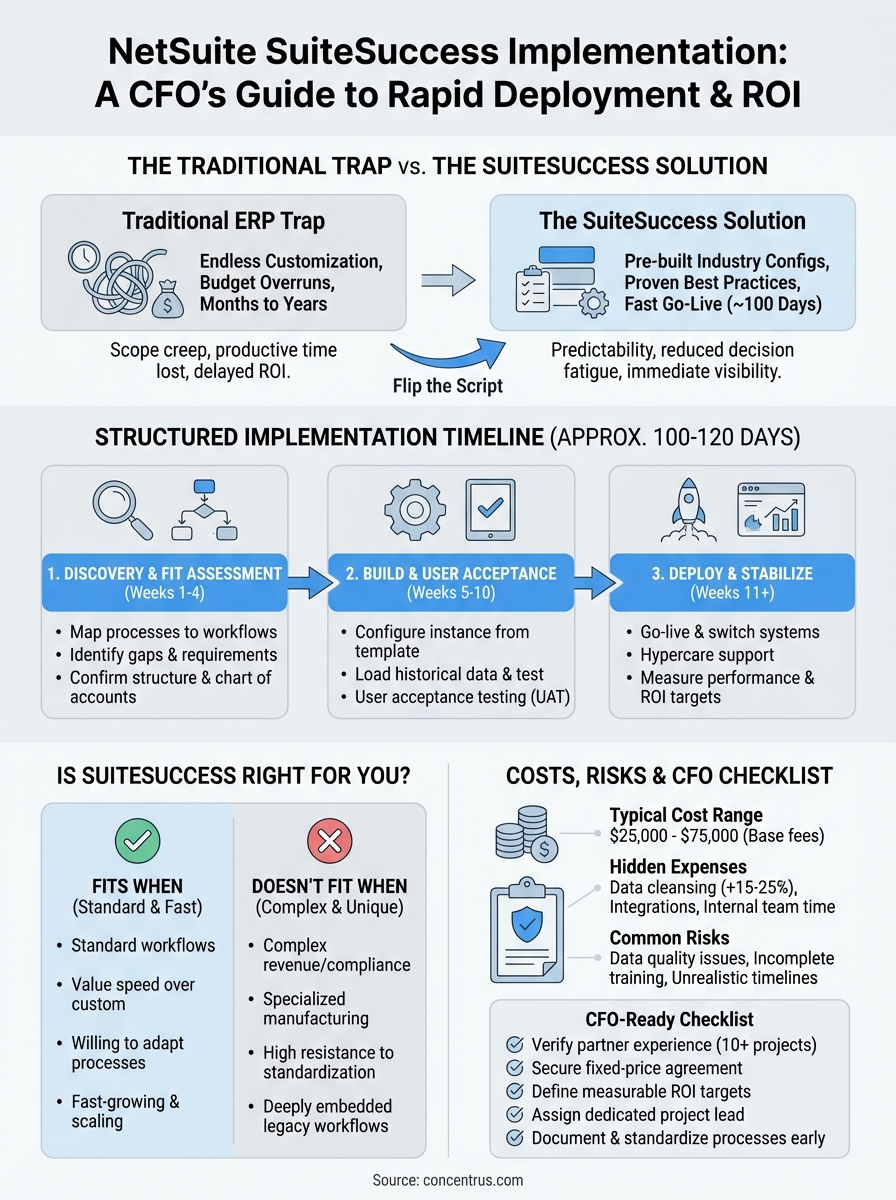
Traditional ERP implementations have a reputation for dragging on for months, sometimes years, while budgets balloon and teams lose momentum. NetSuite developed SuiteSuccess to flip that script. A NetSuite SuiteSuccess implementation uses pre-built industry configurations and proven best practices to get midsized companies live faster, often in as little as 100 days. For CFOs and finance leaders watching the calendar and the bottom line, that speed matters.
But faster doesn’t automatically mean better. The real question is whether a rapid deployment can still deliver the measurable ROI your organization needs, improved cash flow, faster closes, and operational visibility that actually supports decision-making. Understanding what SuiteSuccess includes, how the methodology works, and where it fits (or doesn’t fit) your business model is essential before signing on.
At Concentrus, we’ve guided midsized companies through both SuiteSuccess deployments and more complex custom implementations. We’ve seen what makes these projects succeed and what causes them to stall. This guide breaks down the SuiteSuccess approach phase by phase, covering key benefits, potential limitations, and what you should expect from the process so you can determine if it’s the right path for your ERP investment.
Why SuiteSuccess exists and what it solves
NetSuite built SuiteSuccess as a direct response to the implementation failures that have plagued ERP projects for decades. CFOs and finance teams have watched traditional implementations stretch well past 12 months, consume budgets that double or triple initial estimates, and deliver systems that still require months of additional work before they actually function as promised. Risk aversion becomes the default stance when you’ve seen one failed ERP project drain resources and damage credibility.
The traditional implementation trap
You’ve likely heard the stories or experienced them firsthand. A company commits to a new ERP, expects to be live in six months, and finds itself stuck in endless customization cycles a year later. Consultants bill by the hour while your team debates workflows that should have been decided months earlier. Scope creep becomes standard operating procedure as each department demands its own unique configurations.
The financial impact goes beyond consulting fees. Your team loses productive time to status meetings, requirements gathering sessions that revisit the same questions, and user acceptance testing that reveals problems too late to fix efficiently. Meanwhile, your existing systems continue to underperform, and the ROI you were promised keeps getting pushed further into the future.
What SuiteSuccess was designed to fix
NetSuite developed SuiteSuccess to eliminate the custom-everything approach that causes most implementations to stall. The methodology packages industry-specific configurations that reflect what actually works for companies in your sector, not theoretical best practices that look good in a presentation deck. You get pre-built workflows, reports, and dashboards based on data from thousands of successful NetSuite deployments.
SuiteSuccess reduces decision fatigue by presenting you with proven configurations instead of asking you to design every process from scratch.
Speed matters, but predictability matters more. A NetSuite SuiteSuccess implementation follows a defined path with clear milestones and deliverables at each stage. You know what you’re getting, when you’ll get it, and what your team needs to contribute. That transparency gives CFOs the ability to plan resources, manage expectations with the board, and tie the project to specific financial outcomes like faster month-end closes or improved inventory turns that can be measured from day one.
What SuiteSuccess includes out of the box
A NetSuite SuiteSuccess implementation delivers pre-configured industry editions that go live with functional workflows, reports, and dashboards from day one. You’re not starting with a blank slate and building everything yourself. Instead, you get a complete ERP system designed around the operational patterns NetSuite has documented across thousands of deployments in your specific industry.
Industry-specific configurations
Your SuiteSuccess edition comes loaded with workflows and processes that reflect how companies in your sector actually operate. If you’re in wholesale distribution, you get procurement workflows, inventory management rules, and pricing structures that match typical B2B operations. Manufacturing editions include production planning modules, bill of materials templates, and shop floor controls calibrated for discrete or process manufacturing environments.
Each configuration addresses the operational requirements that define your industry. You won’t spend weeks debating whether to enable certain features or how to structure your chart of accounts because those decisions are already baked into the system based on proven implementations.
Pre-built reports and KPI dashboards
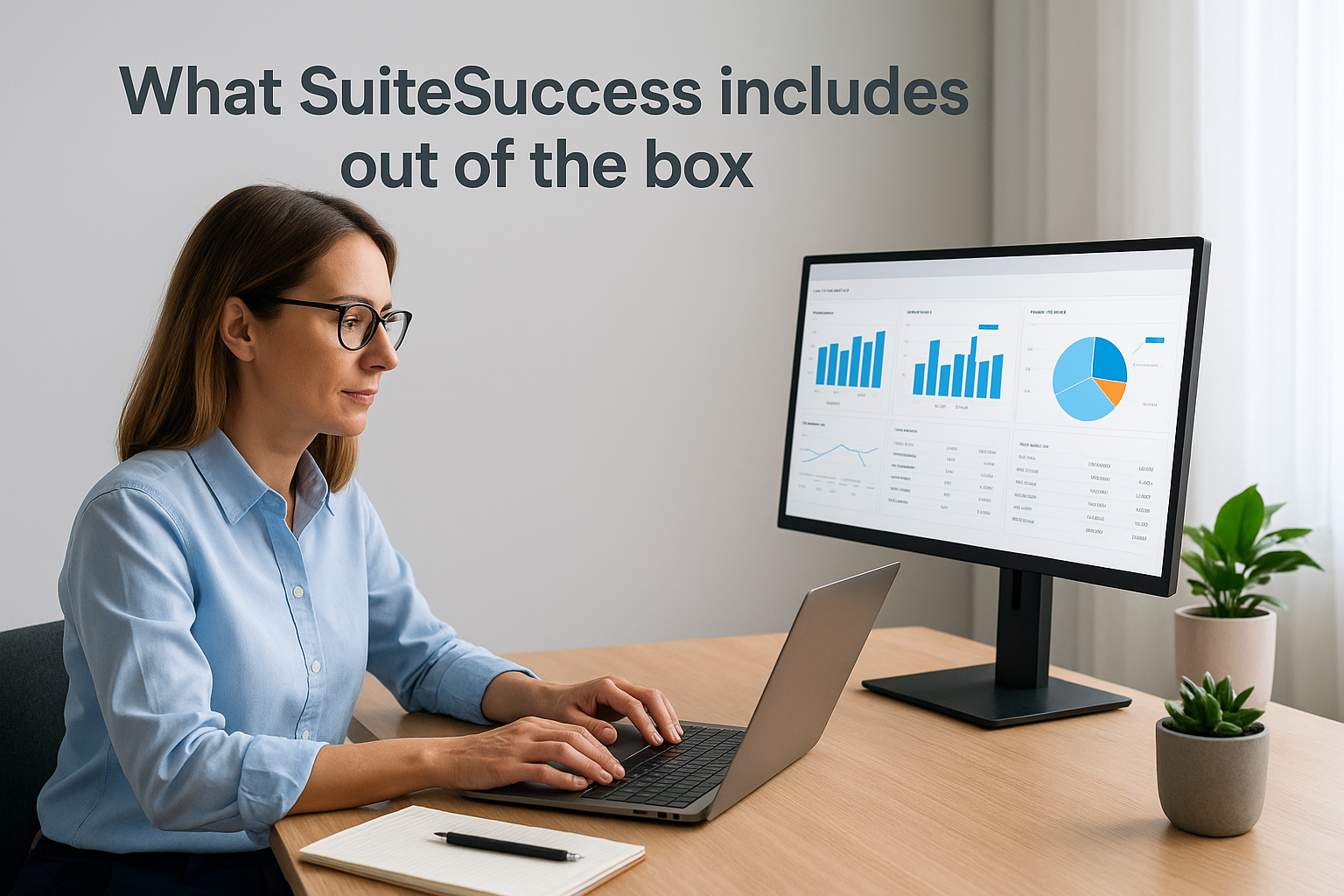
SuiteSuccess packages include role-based dashboards designed for CFOs, controllers, operations managers, and other key stakeholders. You get financial reports that track metrics like days sales outstanding, gross margin by product line, and cash flow projections without custom development work. Operations teams see inventory turns, order fulfillment rates, and supply chain performance from the start.
The pre-built analytics give you immediate visibility into financial and operational performance instead of waiting months for custom reports.
Training materials, implementation guides, and best practice documentation round out the package. NetSuite provides structured onboarding resources that help your team understand not just how to use the system, but why specific workflows and configurations deliver results for companies like yours.
How a SuiteSuccess implementation works step by step
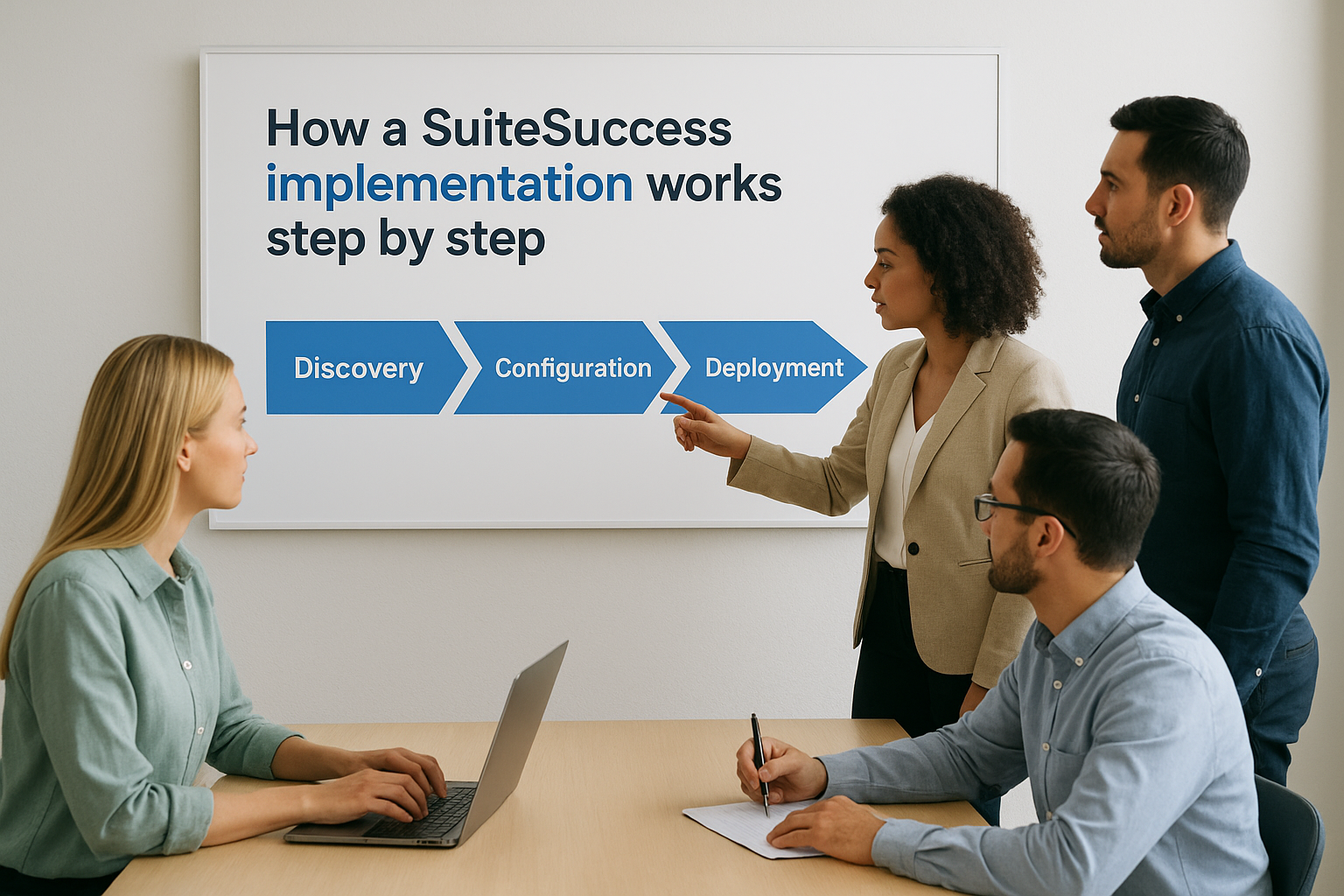
A NetSuite SuiteSuccess implementation follows a structured timeline divided into three core phases that typically run 100 to 120 days from kickoff to go-live. You move through discovery, configuration, and deployment with defined deliverables at each stage. Your implementation partner guides you through this process, but your internal team drives the critical decisions about data migration, process adoption, and change management.
Discovery and fit assessment
Your project starts with a fit analysis where NetSuite or your implementation partner validates that your business model aligns with the chosen industry edition. You identify any gaps between the standard configuration and your specific requirements during this phase. The team maps your existing processes to SuiteSuccess workflows and determines which customizations, if any, justify the additional time and cost.
Configuration workshops follow where you confirm account structures, approval hierarchies, and reporting requirements. Your finance team validates the chart of accounts and financial close process while operations confirms inventory controls and order management workflows.
Build and user acceptance
NetSuite configures your instance using the industry edition template as the foundation. Your team loads historical data, tests integrations with existing systems, and validates that reports show accurate information. This phase includes user acceptance testing where your staff confirms that daily workflows function as expected before you commit to going live.
User acceptance testing reveals whether the system actually supports your team’s daily work or needs adjustment before deployment.
Deploy and stabilize
Go-live happens when you switch from your legacy system to NetSuite for all live transactions. Your implementation partner provides hypercare support during the first weeks to address questions and resolve issues quickly. You measure performance against the ROI targets established during discovery, tracking metrics like close speed and order processing time to confirm the system delivers expected results.
When SuiteSuccess fits and when it does not
A NetSuite SuiteSuccess implementation works best when your business operations align closely with industry standard processes and you value speed over extensive customization. You need to evaluate whether the pre-configured approach supports your actual requirements or forces compromises that undermine operational effectiveness. The decision comes down to how much your business model diverges from typical patterns in your sector.
Companies that benefit from SuiteSuccess
Your organization is a strong candidate for SuiteSuccess if you operate with relatively standard workflows that match common industry practices. Companies with straightforward revenue recognition rules, typical inventory management needs, and conventional financial reporting requirements fit the model well. You gain the most value when your team can adopt proven processes instead of defending legacy workflows that add complexity without delivering competitive advantage.
SuiteSuccess delivers the fastest ROI when you’re willing to adapt your processes to industry-proven workflows rather than customizing the system to match every existing procedure.
Fast-growing companies that need to scale operations quickly often benefit from the rapid deployment timeline. You get a functional system in place while your organization is still flexible enough to adapt processes around it.
When custom implementation makes more sense
Your business requires a more tailored approach when you have complex revenue models, specialized compliance requirements, or operational workflows that define your competitive differentiation. Companies with multi-entity consolidations across different regulatory jurisdictions, custom manufacturing processes, or intricate pricing structures often need configurations that go beyond what SuiteSuccess provides out of the box.
You should also reconsider SuiteSuccess if your team has strong resistance to process standardization or if existing workflows are deeply embedded in customer contracts and vendor agreements. The time and cost required to force-fit these requirements into a standard edition often eliminates the speed advantage that makes SuiteSuccess attractive in the first place.
Common risks, costs, and a CFO-ready checklist
A NetSuite SuiteSuccess implementation costs between $25,000 and $75,000 depending on your company size, complexity, and chosen edition, significantly less than traditional implementations that often exceed $150,000. However, you face specific risks that can derail even a rapid deployment. Data quality issues, incomplete user training, and unrealistic go-live timelines account for most SuiteSuccess failures. Understanding these risks and budgeting appropriately gives you control over the project outcome.
Typical cost ranges and hidden expenses
Your base implementation fees cover configuration, training, and go-live support but rarely include data migration complexity, third-party integrations, or extended post-launch assistance. Budget an additional 15 to 25 percent for data cleansing if your legacy systems contain duplicate records, inconsistent naming conventions, or incomplete transaction histories. Integration costs for payment processors, shipping platforms, or specialized industry applications add $5,000 to $20,000 per connection depending on complexity.
Factor in internal resource costs including your team’s time for testing, training, and process documentation when calculating total project investment.
Pre-implementation checklist for CFOs
Verify that your implementation partner has completed at least 10 SuiteSuccess projects in your specific industry edition before signing a contract. Confirm they provide a fixed-price agreement with defined deliverables rather than open-ended hourly billing that creates cost uncertainty. Establish measurable ROI targets tied to specific financial metrics like days to close or order processing time that you can track from go-live forward. Assign an internal project lead with decision-making authority and protected time to focus on the implementation, not someone juggling this alongside their regular responsibilities. Document your current processes and identify which workflows you’ll standardize versus which require customization before discovery begins.
Next steps
You now understand how a NetSuite SuiteSuccess implementation delivers faster deployment through industry-specific configurations, when the methodology fits your business model, and what risks to mitigate before you start. The decision isn’t whether to implement NetSuite, it’s whether to pursue a rapid SuiteSuccess path or invest in a more customized approach that addresses the complex requirements your business can’t compromise on.
Your next move should focus on validating that SuiteSuccess aligns with your specific ROI goals. Map your critical financial and operational processes to the industry edition capabilities, identify any gaps that would require workarounds, and confirm your internal team has the bandwidth to execute the project on an aggressive 100-day timeline. Getting this assessment right before you sign a contract determines whether you achieve a smooth go-live or spend six months fixing avoidable problems.
Concentrus helps CFOs guarantee ROI from NetSuite implementations by tying every deployment decision to measurable financial outcomes, whether you’re pursuing SuiteSuccess or need a more tailored approach. Get in touch to assess whether SuiteSuccess fits your specific situation.