


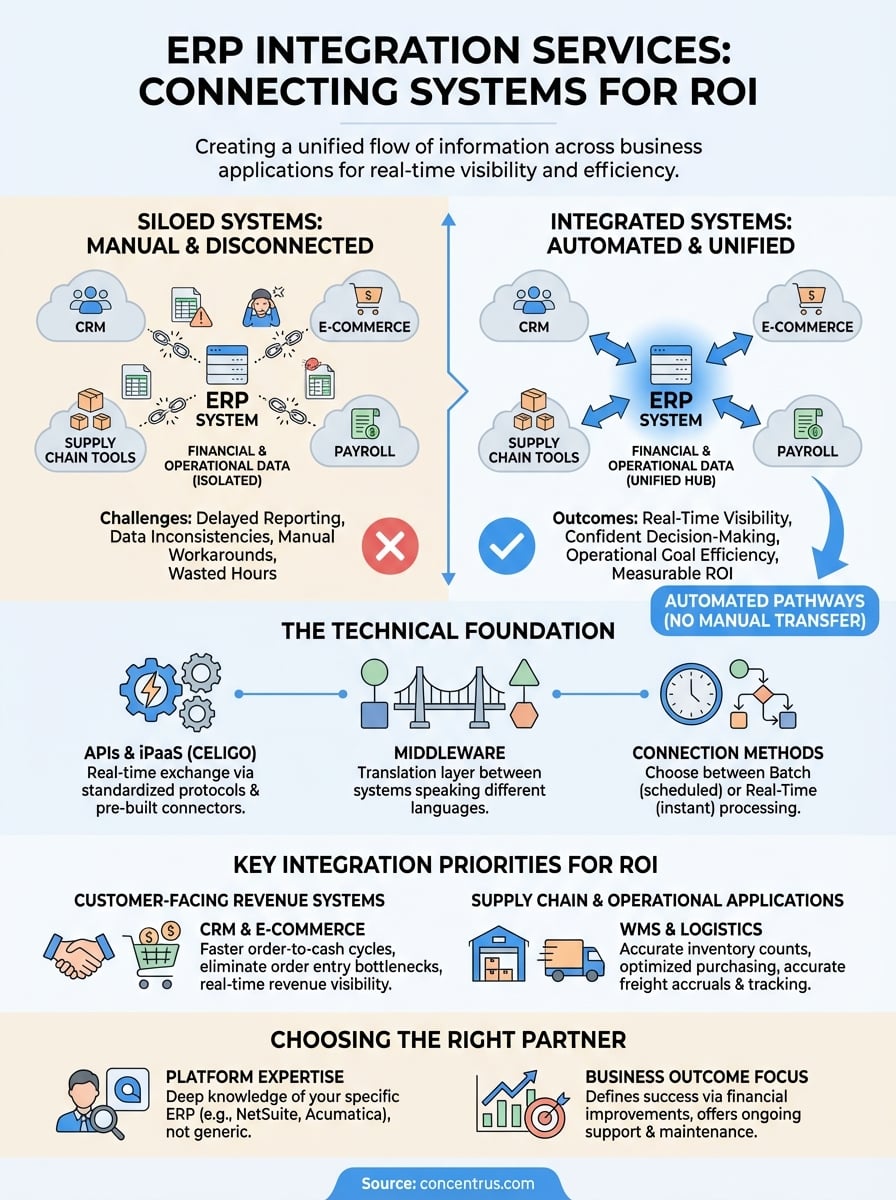
Your ERP system holds critical financial and operational data, but if it’s siloed from your CRM, e-commerce platform, or supply chain tools, you’re likely dealing with manual workarounds, data inconsistencies, and delayed reporting. ERP integration services solve this problem by connecting your enterprise resource planning system to the other applications your business relies on, creating a unified flow of information across departments.
For CFOs and finance leaders at midsized companies, the stakes are high. Disconnected systems mean slower month-end closes, unreliable forecasting, and wasted hours reconciling data that should move automatically. When your ERP talks seamlessly to your other tools, you gain real-time visibility into cash flow, inventory, and profitability, without the spreadsheet gymnastics. That’s the kind of operational clarity that drives confident decision-making and measurable ROI.
At Concentrus, we specialize in NetSuite and Acumatica ERP implementations built around our ROI Roadmap™ methodology, which means integration isn’t an afterthought, it’s baked into the strategy from day one. Through our Concentrus Partner Network™, we connect your ERP to best-in-class third-party solutions like Avalara, Celigo, and ShipHawk, ensuring your technology investment delivers the financial outcomes you need. This article breaks down what ERP integration services actually involve, the methods used to connect systems, and how to evaluate whether your current setup is leaving ROI on the table.
What ERP integration services are
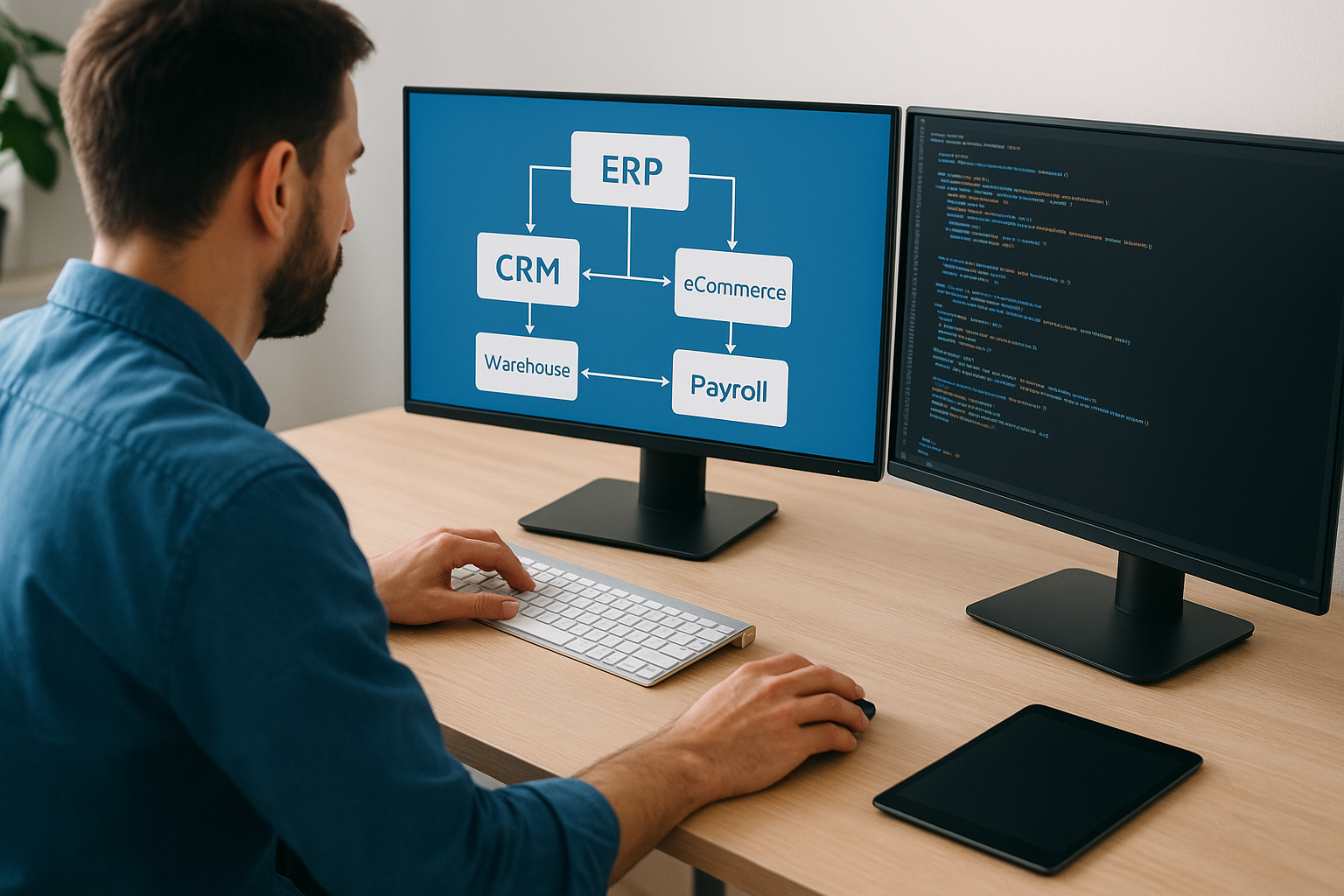
ERP integration services are professional offerings that connect your enterprise resource planning system to other business-critical applications like CRM platforms, e-commerce sites, warehouse management systems, payroll software, and marketing automation tools. Instead of forcing your team to manually transfer data between systems or relying on error-prone spreadsheets, these services establish automated pathways that keep information synchronized across your technology stack. When a customer places an order through your e-commerce platform, for example, that transaction flows directly into your ERP, updating inventory levels, triggering fulfillment workflows, and recording revenue, all without human intervention.
The services themselves involve much more than simply plugging in an API and hoping for the best. Integration specialists assess your existing systems, map out data relationships, design the technical architecture, build or configure the connections, test data flows under real-world conditions, and provide ongoing monitoring to catch issues before they disrupt operations. This work requires expertise in both the ERP platform (like NetSuite or Acumatica) and the third-party applications you need to connect, along with a deep understanding of your business processes and data governance requirements.
The technical foundation
At a technical level, ERP integration services rely on several connection methods to move data between systems. Application Programming Interfaces (APIs) are the most common approach, allowing systems to exchange information in real time through standardized protocols. Many modern cloud-based ERPs offer native APIs specifically designed for integration, making it easier to establish secure, reliable connections without custom coding. Integration Platform as a Service (iPaaS) solutions like Celigo provide pre-built connectors that handle much of the technical complexity, letting you configure integrations through visual workflows rather than writing code from scratch.
Middleware platforms act as translation layers between systems that speak different technical languages. If your ERP uses one data format and your CRM uses another, middleware converts the information so both systems understand what’s being exchanged. Some integrations use batch processing, where data transfers happen at scheduled intervals (like nightly updates), while others operate in real time, pushing changes instantly as they occur. Your integration services provider helps you choose the right technical approach based on your data volume, timing requirements, and the capabilities of your existing systems.
What integration services typically include
When you engage erp integration services, you’re getting more than just technical hookups. The provider starts with discovery and planning, interviewing stakeholders across finance, operations, sales, and IT to understand how information currently flows and where bottlenecks exist. They document which data fields need to sync between systems, identify any transformation rules (like converting currencies or standardizing product codes), and establish error-handling procedures for when something goes wrong.
The best integration projects define success metrics upfront, so you know exactly what financial and operational improvements you’re paying for.
Implementation includes building or configuring the actual connections, setting up data mapping to ensure fields align correctly across systems, and conducting thorough testing with sample data and real-world scenarios. Post-launch support involves monitoring data flows, troubleshooting errors, optimizing performance, and updating integrations when you upgrade software or add new applications. Many providers offer managed services where they handle ongoing maintenance, freeing your internal IT team to focus on strategic initiatives rather than fixing broken data feeds.
Why ERP integration matters for finance leaders
Your financial close process shouldn’t require an army of accountants reconciling data from five different systems. When your ERP operates in isolation from the applications that generate revenue, manage inventory, or process payroll, you’re essentially running blind until someone manually compiles the information. That delay between when transactions occur and when they hit your financial statements creates decision-making gaps that can cost you margin, working capital, or market opportunities. For CFOs at midsized companies, where resources are already stretched thin, these inefficiencies compound fast.
Financial visibility and accuracy
Integration gives you real-time line of sight into the metrics that actually drive business performance. When your e-commerce platform feeds directly into your ERP, you see revenue as it happens, not three days later when someone enters the batch. Your accounts receivable aging reflects actual customer payments the moment they clear, your inventory valuation updates with every warehouse movement, and your cash flow projections pull from live data across banking, billing, and procurement systems. This immediacy transforms how you run month-end close, cutting days off the calendar because you’re not chasing down discrepancies or waiting for CSV exports.
Accuracy improves because you eliminate the human error that creeps in during manual data entry. When your sales team updates a customer record in your CRM, that change flows automatically to your ERP, ensuring invoices go to the correct address and payment terms match what your account manager negotiated. You’re not dealing with duplicate records, mismatched SKUs, or transposed numbers that force journal entries to fix mistakes that should never have happened.
The best erp integration services don’t just move data, they enforce data governance rules that prevent bad information from entering your system in the first place.
Operational efficiency and resource allocation
Your finance team shouldn’t spend 20 hours a week copying data between systems. Integration redirects that effort toward strategic analysis like identifying which product lines actually generate profit or modeling scenarios for capital allocation decisions. When accounts payable automatically pulls vendor invoices from your procurement system and matches them to purchase orders in your ERP, your AP clerk can focus on managing supplier relationships and negotiating better terms instead of keying in invoice details.
How ERP integration services work
Understanding the process behind erp integration services helps you set realistic expectations and prepare your team for a successful implementation. The work unfolds across distinct phases that balance technical requirements with business needs, ensuring your integrations deliver measurable results rather than just checking a technical box. Your provider begins by understanding what you need to achieve, then designs and builds connections that align with those financial and operational goals, followed by rigorous testing before anything touches your production environment.
Initial assessment and planning
Your integration partner starts with deep discovery into how information currently moves through your organization. They interview stakeholders across departments to map existing workflows, identify data sources, and document where manual processes create bottlenecks or errors. This phase reveals which integrations deliver the highest ROI, whether that means connecting your e-commerce platform to eliminate order entry delays or linking your warehouse management system to improve inventory accuracy.
The provider analyzes your technical architecture, evaluating API capabilities, data formats, security requirements, and any limitations of your existing systems. They define data mapping rules that specify exactly which fields sync between applications, how often updates occur, and what happens when conflicts arise. This planning produces a detailed integration blueprint that outlines timelines, resource needs, testing protocols, and success metrics tied to specific business outcomes like faster close cycles or reduced reconciliation time.
Building and testing connections
Your provider builds the actual integrations using the technical approach that best fits your needs, whether that involves native APIs, iPaaS platforms, or custom middleware. They configure data transformations to ensure information flows correctly between systems with different formats, set up error handling to catch issues before they corrupt your financial data, and establish monitoring alerts that notify your team when something needs attention.
The testing phase separates successful integrations from those that create more problems than they solve.
Testing happens in stages, starting with controlled environments where your provider runs sample transactions through the connections to verify data accuracy and system behavior. They conduct user acceptance testing with your actual team members, using real scenarios that mirror daily operations. Only after confirming the integrations perform reliably under production-like conditions does your provider schedule deployment, often during low-activity periods to minimize disruption while closely monitoring the first few days of live data flow.
Common ERP integrations to prioritize
Not every integration delivers the same return, and trying to connect everything at once spreads your resources thin while delaying the financial improvements you need now. Smart CFOs focus on integrations that eliminate the most painful manual processes, close the biggest visibility gaps, or unlock specific revenue opportunities tied to their growth strategy. Your priorities depend on where your business loses time and money today, whether that means order processing delays, inventory discrepancies, or cash flow blind spots that force conservative decisions.
Customer-facing revenue systems
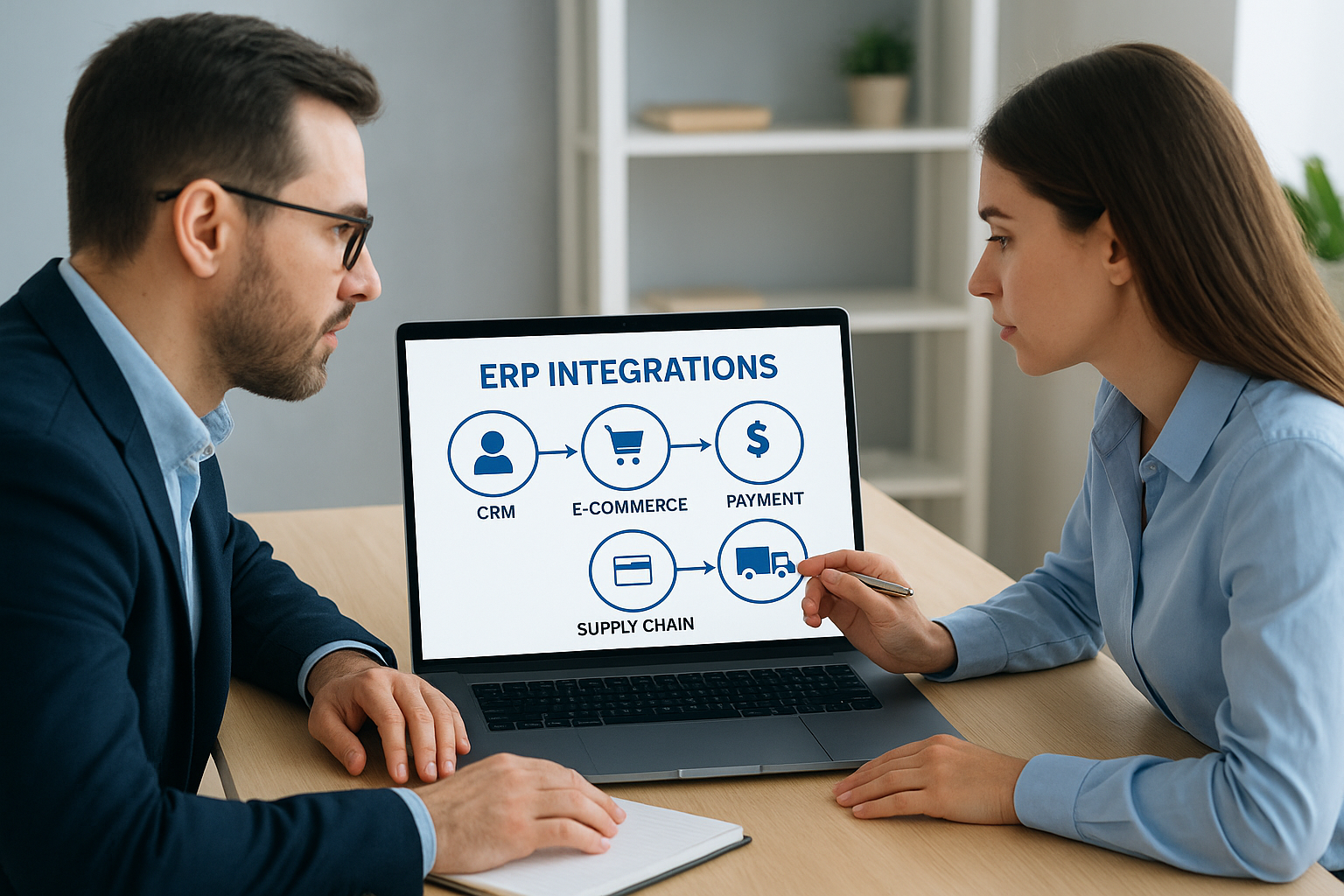
Your CRM and e-commerce platforms typically deserve top priority because they sit closest to revenue generation. When your CRM integrates with your ERP, sales data flows automatically into financial records, customer information stays synchronized across systems, and your billing team can generate invoices without re-entering order details. E-commerce integration eliminates the order entry bottleneck that slows fulfillment, reduces errors from manual data transfer, and gives you real-time visibility into which products actually drive profit after accounting for discounts, returns, and fulfillment costs.
Payment processing integration ensures revenue recognition happens when transactions clear, not when someone remembers to post them manually. You see cash position update in real time, can forecast collections based on actual payment patterns, and close your books faster because accounts receivable reconciliation becomes automatic rather than a three-day archaeological dig through payment confirmations.
Most erp integration services providers recommend tackling customer-facing systems first because the ROI shows up immediately in faster order-to-cash cycles.
Supply chain and operational applications
Warehouse management system integration gives you accurate inventory counts that update with every receipt, transfer, and shipment, eliminating the physical count surprises that blow up your cost of goods sold calculations. Your purchasing team can make reorder decisions based on real demand signals instead of guessing, and your finance team finally gets inventory valuation they can trust without quarterly write-downs to fix phantom stock.
Logistics and shipping platform connections automate tracking updates, generate accurate freight accruals, and help you identify which carriers actually deliver the service levels you’re paying for. Manufacturing execution system integration captures production costs as they happen, letting you calculate true product profitability instead of discovering margin problems six months after you signed the contract.
How to choose an ERP integration services partner
Selecting the right partner for erp integration services determines whether your project delivers measurable ROI or becomes another technology investment that underdelivers. You need a provider who combines deep technical expertise in your specific ERP platform with proven experience translating business requirements into working integrations that actually solve operational problems. The cheapest bid rarely delivers the best outcome when you factor in the cost of failed integrations, data quality issues, or implementations that require expensive fixes six months later.
Technical expertise and platform specialization
Your partner should demonstrate specialized knowledge of your ERP system, whether that means NetSuite, Acumatica, or another platform. Generic integrators who claim to work with every system typically lack the depth to navigate platform-specific quirks, optimize performance, or leverage native features that reduce complexity. Ask potential providers for client references from companies in similar industries with comparable integration requirements, and verify they’ve handled the specific applications you need to connect.
Choose partners who can show you actual integration architectures they’ve built, not just marketing promises about what they can do.
Technical capabilities matter, but so does the provider’s approach to data governance and security. Your integrations will move sensitive financial information between systems, so your partner needs clear protocols for handling credentials, encrypting data in transit, and complying with any industry regulations that apply to your business.
Business outcome focus and ongoing support
The best providers frame integrations around specific financial improvements you can measure, like reducing your close cycle from 10 days to 5, eliminating $50,000 in annual reconciliation costs, or capturing revenue 48 hours faster. They should help you define success metrics upfront and build tracking mechanisms that prove the integration delivers the promised ROI, not just technical functionality that looks good in a demo.
Evaluate what happens after go-live, because integrations require ongoing maintenance as you upgrade software, add applications, or change business processes. Your provider should offer clear support options with defined response times, proactive monitoring to catch issues before they impact operations, and a track record of stable, reliable integrations that don’t require constant firefighting. Partners who disappear after deployment leave you vulnerable to problems that disrupt financial reporting exactly when you need it most.
Next steps
Your ERP system represents a significant investment, but disconnected applications limit the financial returns you can extract from that technology. Evaluating your current integration landscape means looking honestly at where manual processes slow your close, where data quality issues undermine decisions, and where siloed systems prevent the real-time visibility your business needs to scale profitably. The cost of poor integration shows up in delayed reporting, wasted staff time, and missed opportunities that competitors with better connected systems capture first.
If your finance team spends hours reconciling data that should flow automatically, or your ERP can’t deliver the operational insights you need to confidently allocate capital, it’s time to assess whether your current setup actually supports your growth strategy. At Concentrus, we build NetSuite and Acumatica implementations around our ROI Roadmap™ methodology, ensuring your erp integration services deliver measurable financial outcomes from day one. Explore how we align ERP investments with guaranteed ROI to transform disconnected systems into the strategic advantage your business deserves.