

Every CFO knows that cash tied up in excess stock or lost to stockouts directly impacts the bottom line. Yet many midsized companies still struggle to answer a fundamental question: what is inventory management, and how can it be optimized to drive real financial results? The answer goes far beyond counting products on shelves, it’s about creating visibility, control, and predictability across your entire supply chain.
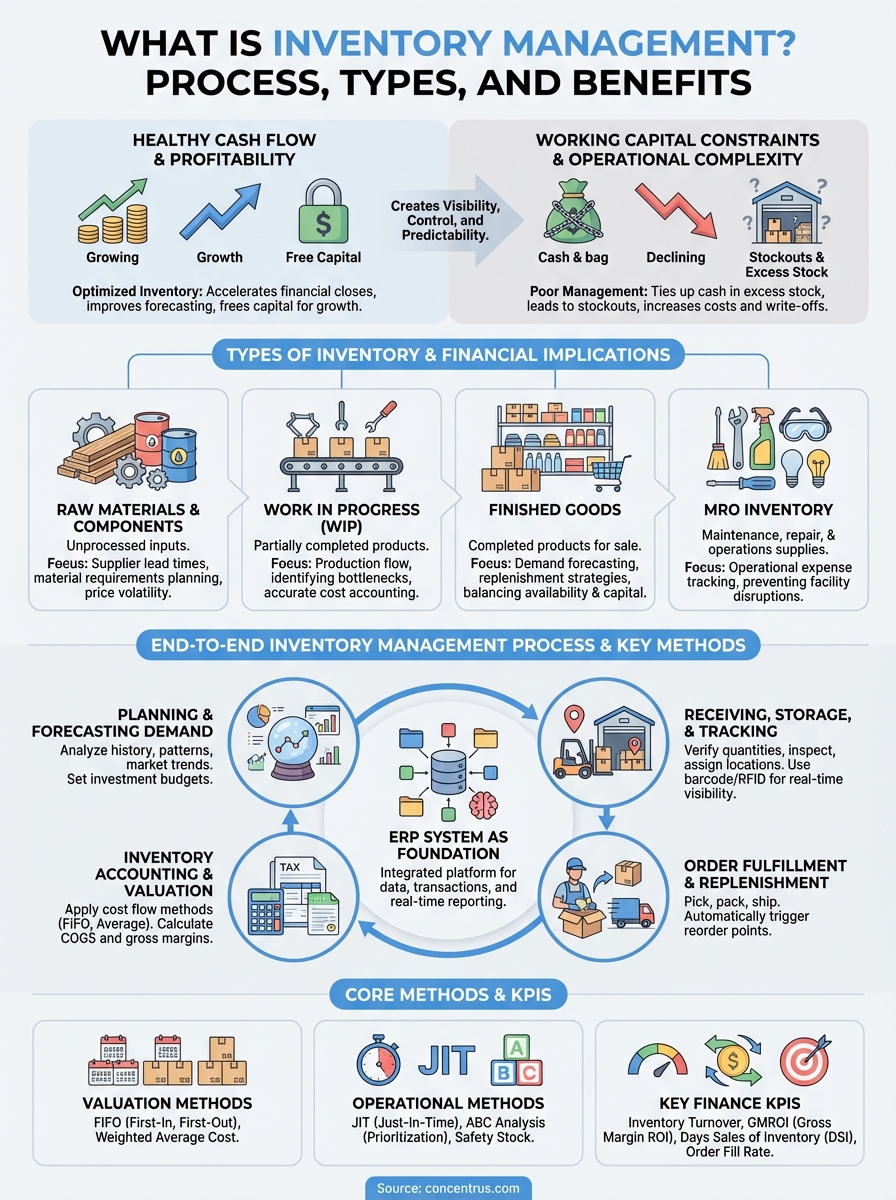
Effective inventory management determines whether your company operates with healthy cash flow or constantly battles working capital constraints. It influences everything from customer satisfaction and order fulfillment speed to warehouse costs and profit margins. For finance leaders evaluating ERP systems like NetSuite or Acumatica, understanding inventory management fundamentals is essential to building a business case that delivers measurable ROI.
At Concentrus, we’ve helped midsized companies transform their inventory operations through strategic ERP implementation. We’ve seen firsthand how the right inventory management approach, supported by properly configured technology, can accelerate financial closes, improve forecasting accuracy, and free up capital for growth initiatives. This article breaks down the inventory management process, explores the different types of inventory you’ll encounter, and explains why getting this function right is critical to your company’s financial health. Whether you’re implementing a new ERP system or rescuing an underperforming one, this foundation will help you ask the right questions and set the right expectations.
Why inventory management matters for midsized companies
Your inventory represents one of the largest capital investments on your balance sheet, often accounting for 30-50% of total assets in product-based businesses. When you understand what is inventory management and implement it effectively, you directly influence your company’s cash conversion cycle, profitability, and ability to fund growth initiatives. Poor inventory management, by contrast, creates a cascade of financial problems that compound over time.
Financial impact on working capital and profitability
Inventory ties up cash that you could otherwise deploy for expansion, debt reduction, or strategic investments. Every dollar sitting in excess stock or obsolete products is a dollar unavailable for hiring, marketing, or equipment upgrades. The financial consequences extend beyond opportunity cost, you’re also paying for warehouse space, insurance, handling, and the risk of write-offs due to damage, theft, or obsolescence.
Accurate inventory management gives you clearer visibility into your true cost of goods sold and gross margins. When you can’t reliably track inventory movements, costs, and valuations, your financial statements become unreliable. This creates problems during audits, makes it difficult to secure financing, and undermines confidence in your financial projections. CFOs at midsized companies often discover that fixing inventory accounting issues becomes a prerequisite to more strategic initiatives like M&A preparation or capital raises.
Getting inventory management right means you can confidently forecast cash needs, optimize your working capital, and make data-driven decisions about purchasing, production, and pricing.
The impact on profitability goes beyond the balance sheet. When you lack accurate inventory data, you make suboptimal decisions about pricing, promotions, and product mix. You might discount items that are actually selling well or continue producing products with poor margins. Finance teams need real-time inventory visibility to perform meaningful profitability analysis at the SKU level and adjust strategies accordingly.
Operational complexity as you scale
Midsized companies face a unique challenge: you’ve outgrown basic spreadsheets and manual tracking methods, but you might not yet have the sophisticated systems and processes of larger enterprises. Your inventory complexity increases exponentially as you add products, locations, sales channels, and trading partners. What worked when you had 100 SKUs in one warehouse completely breaks down with 5,000 SKUs across multiple facilities.
Growth amplifies every existing inventory problem. If your fulfillment accuracy is 95%, that might seem acceptable until you’re processing 1,000 orders daily instead of 100. Suddenly, 50 daily errors strain customer service, create returns processing overhead, and damage your reputation. The same principle applies to cycle counting, receiving processes, and warehouse organization. Scaling without addressing inventory fundamentals leads to operational chaos that directly impacts your ability to serve customers and control costs.
Customer expectations and competitive pressure
Your customers don’t care whether you’re midsized or enterprise-scale. They expect consistent product availability, fast fulfillment, and accurate order information. When you can’t meet these expectations because of inventory problems, they’ll simply buy from competitors who can. The cost of customer acquisition makes it critical that you retain buyers through reliable order fulfillment rather than losing them to stockouts or shipping delays.
E-commerce and omnichannel selling have raised the stakes even higher. Customers expect to see real-time inventory availability when they shop online, pick up orders in stores, and return products through any channel. Without integrated inventory management, you risk overselling products you don’t have, disappointing customers, and damaging your brand reputation. Competitors with better inventory systems can offer faster delivery, more accurate availability information, and smoother customer experiences, all of which translate to competitive advantages that directly impact your revenue.
The finance implications are straightforward: lost sales due to stockouts directly reduce revenue, while excess inventory from poor demand planning inflates costs and destroys margins. Getting inventory management right gives you the operational foundation to compete effectively while maintaining healthy financial performance.
Types of inventory you need to track
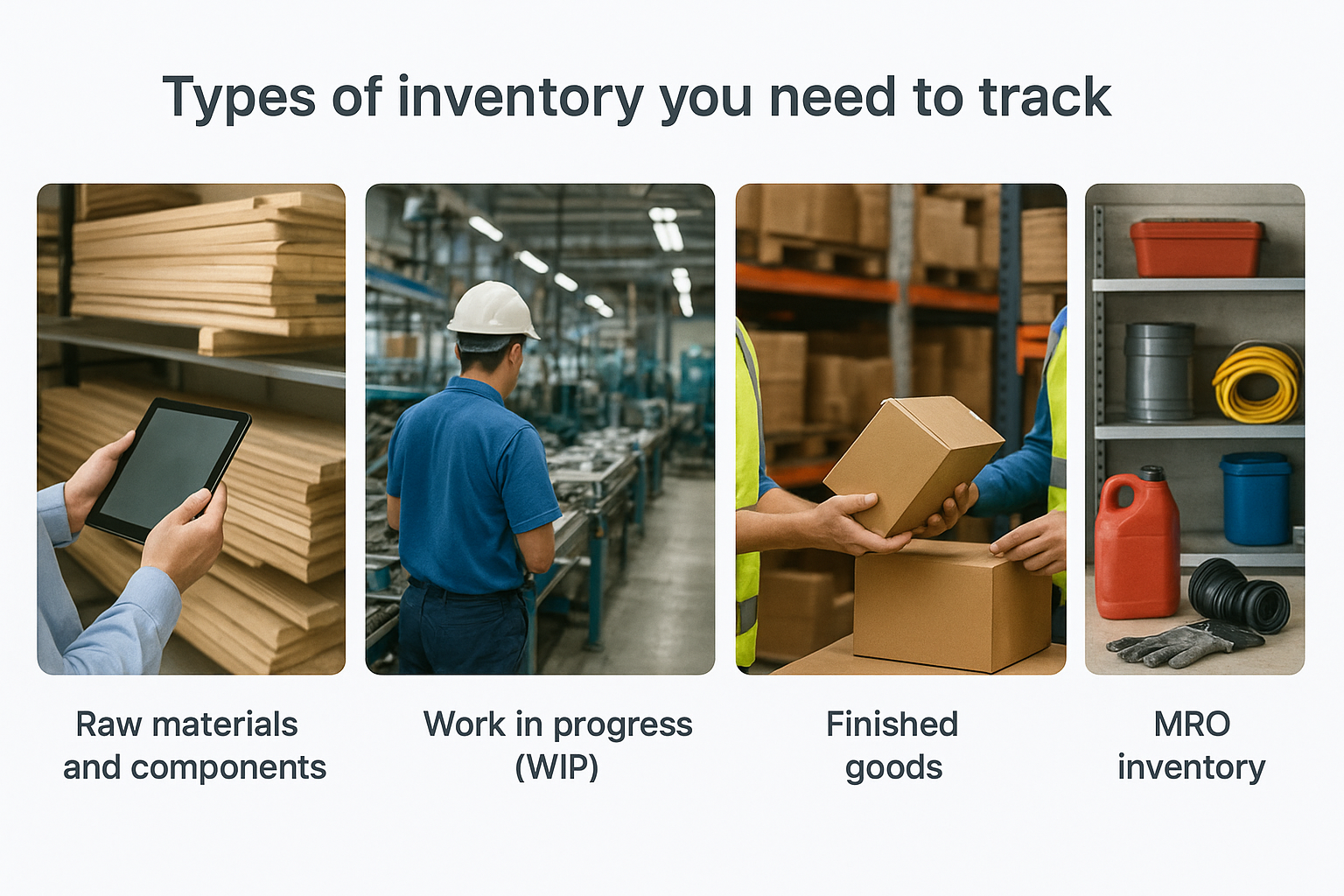
Understanding what is inventory management starts with recognizing that not all inventory serves the same purpose or behaves the same way. Your inventory classification determines how you track, value, and optimize each category. Midsized companies typically manage four distinct types of inventory, each with different financial implications and operational requirements. Getting this classification right in your ERP system ensures accurate cost accounting, meaningful reporting, and better decision-making across your supply chain.
Raw materials and components
Raw materials represent the unprocessed inputs you transform into finished products. This includes everything from lumber and metal to chemicals, fabrics, and electronic components. Your purchasing team orders these items based on production schedules and demand forecasts, while your finance team needs accurate visibility into how much capital is tied up in material inventory at any given time.
Tracking raw materials properly helps you avoid production delays caused by shortages while preventing excess purchases that tie up working capital. You need to monitor supplier lead times, minimum order quantities, and price volatility for each raw material category. Your ERP system should automatically calculate material requirements based on production plans and trigger reorder points before you run out. This level of automation becomes critical as your product complexity increases and you’re managing hundreds or thousands of component SKUs.
Work in progress (WIP)
Work in progress inventory includes partially completed products on your production floor or assembly line. WIP represents materials that have entered production but haven’t yet been finished and transferred to your finished goods inventory. For manufacturers, WIP often represents a significant portion of total inventory value and requires careful tracking to maintain accurate cost accounting.
Your finance team needs visibility into WIP levels to properly value inventory on your balance sheet and calculate true production costs. High WIP levels indicate potential bottlenecks in your manufacturing process or inefficient production flow that’s tying up capital unnecessarily. Modern ERP systems track WIP movement through different production stages, helping you identify where products stall and where you can improve throughput.
Finished goods
Finished goods are completed products ready for sale to customers. This inventory sits in your warehouses, distribution centers, or retail locations waiting for orders. Finance teams focus intensely on finished goods because this is where you see the clearest relationship between inventory levels and customer service, as well as the most significant risk of obsolescence.
Optimizing finished goods inventory means finding the balance between having enough stock to meet customer demand without tying up excessive capital in products that might not sell quickly.
Your finished goods inventory strategy directly impacts your cash conversion cycle and customer satisfaction metrics. Stockouts lose sales, while excess inventory increases holding costs and obsolescence risk. You need sophisticated demand forecasting and replenishment strategies to optimize this balance.
MRO inventory
Maintenance, repair, and operations (MRO) inventory includes the consumable supplies and spare parts that keep your facilities and equipment running but don’t become part of your finished products. This category covers everything from cleaning supplies and safety equipment to replacement parts for manufacturing machinery and warehouse equipment.
While MRO typically represents a smaller percentage of total inventory value, poor management creates operational disruptions that can shut down production lines or warehouses. Finance leaders should track MRO spending as an operational expense separate from production materials to accurately analyze manufacturing efficiency and facility costs.
How inventory management works end to end
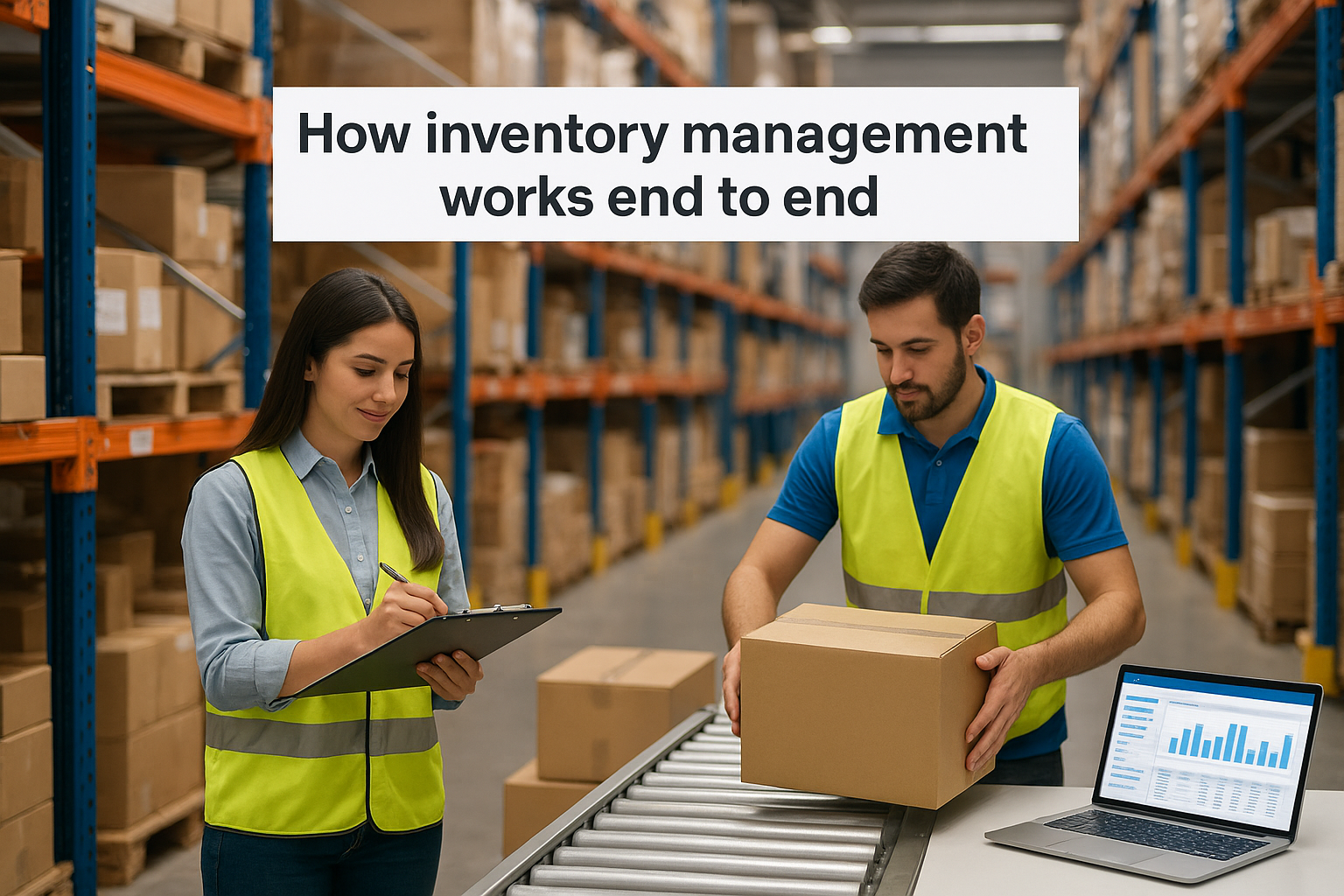
The inventory management process encompasses every stage of your product lifecycle, from initial demand forecasting through final disposal or return. When you understand what is inventory management as an end-to-end process, you recognize it’s not just about tracking quantities but orchestrating a series of interconnected steps that impact your financial performance and operational efficiency. Each stage feeds data into the next, creating a continuous cycle that requires coordination across purchasing, operations, finance, and sales teams.
Planning and forecasting demand
Your inventory management cycle starts with demand planning, where you analyze historical sales data, seasonal patterns, market trends, and customer insights to predict future product needs. Finance teams play a critical role here by setting inventory investment budgets and working capital constraints that guide purchasing decisions. Accurate forecasting prevents the twin problems of stockouts that lose sales and overstock that ties up cash.
You need to balance statistical forecasting models with input from your sales team about upcoming promotions, new customer accounts, or market changes. Your ERP system should integrate sales history with demand signals from multiple sources to generate replenishment recommendations. The goal is creating purchase orders and production schedules that align inventory levels with actual customer demand while respecting your financial constraints.
Receiving, storage, and tracking
When inventory arrives at your facility, you follow receiving procedures that verify quantities, inspect for damage, and record the receipt in your ERP system. This step updates your inventory records, triggers payment obligations, and establishes the cost basis you’ll use for financial reporting. Proper receiving processes prevent discrepancies between physical inventory and system records that create accounting problems downstream.
Your storage decisions determine how efficiently you can locate and pick products when orders arrive, directly impacting fulfillment speed and labor costs.
You organize inventory using location management systems that assign specific bins, shelves, or warehouse zones to each SKU. Modern warehouses use barcode scanning or RFID technology to track products as they move between locations. Your finance team needs this inventory visibility to perform accurate valuations, especially when you store the same product in multiple locations with different cost bases.
Order fulfillment and replenishment
When customer orders arrive, your warehouse team picks the requested items, packs them for shipment, and updates inventory quantities to reflect the sale. This fulfillment process connects directly to your revenue recognition and cost of goods sold calculations. Your ERP system should automatically reduce inventory levels, calculate the cost of items sold, and trigger reorder points when stock reaches predetermined thresholds.
Replenishment decisions use your inventory data to generate purchase orders or production work orders that maintain optimal stock levels. You continuously monitor inventory turnover rates, carrying costs, and service level targets to refine your replenishment parameters. This closed-loop process ensures you maintain the right balance between product availability and capital efficiency throughout your entire inventory lifecycle.
Core inventory management methods and when to use them
Understanding what is inventory management requires knowing the different methodologies you can apply to value, control, and optimize your stock. The methods you choose directly affect your financial statements, tax obligations, and operational efficiency. Most midsized companies use a combination of approaches depending on their industry, product characteristics, and business objectives. Your ERP system should support multiple methods simultaneously so you can apply the right technique to each inventory category.
Cost flow assumptions for valuation
Your accounting team needs to select a cost flow method that determines how you calculate the cost of goods sold and value remaining inventory. FIFO (First In, First Out) assumes you sell the oldest inventory first, which typically results in lower COGS and higher profits during inflationary periods. This method works well for perishable products or items with expiration dates because it mirrors the actual physical flow of goods.
LIFO (Last In, First Out) assumes you sell the most recently purchased inventory first. This method can reduce your tax liability during inflation by increasing COGS and lowering reported profits, though it’s not permitted under international accounting standards. Weighted average cost smooths out price fluctuations by calculating an average cost for all units, making it ideal when you can’t distinguish between inventory batches or when prices fluctuate significantly.
Operational control strategies
Just-in-Time (JIT) inventory minimizes holding costs by ordering materials only as you need them for production or sale. This approach reduces carrying costs and warehouse space requirements but requires reliable suppliers and accurate demand forecasting. You typically implement JIT when you have stable demand patterns, strong supplier relationships, and high inventory holding costs.
Economic Order Quantity (EOQ) calculates the optimal order size that minimizes your total inventory costs by balancing ordering expenses against holding costs.
Safety stock represents the extra inventory you maintain as a buffer against demand variability and supply disruptions. You calculate safety stock levels based on lead time uncertainty, demand volatility, and your desired service level. Higher safety stock improves customer satisfaction but ties up more working capital.
ABC classification for prioritization
ABC analysis categorizes your inventory into three tiers based on revenue contribution and value. A items represent roughly 20% of your SKUs but generate 80% of your revenue, requiring tight control and frequent monitoring. B items have moderate value and receive standard management attention, while C items are numerous but low value, justifying simpler replenishment rules and less frequent review.
This prioritization helps you allocate limited resources effectively by focusing attention where it matters most to your financial performance. Your finance team uses ABC classification to set cycle counting frequencies, safety stock policies, and inventory investment priorities across your entire product portfolio.
Inventory KPIs and formulas finance teams rely on
Understanding what is inventory management means tracking the right metrics to measure performance and identify improvement opportunities. Your finance team needs specific key performance indicators that connect inventory decisions to financial outcomes like cash flow, profitability, and return on assets. These metrics give you objective data to evaluate whether your inventory investments are generating acceptable returns or tying up capital that could be deployed more effectively. Without consistent KPI tracking in your ERP system, you’re making inventory decisions based on gut feel rather than financial analysis.

Inventory turnover and efficiency metrics
Inventory turnover measures how many times you sell and replace your stock during a specific period. You calculate it by dividing your cost of goods sold by average inventory value (beginning + ending inventory / 2). A turnover ratio of 6 means you cycle through your inventory six times annually, which translates to roughly 60 days of stock on hand. Higher turnover indicates you’re efficiently converting inventory to sales, while low turnover suggests you’re carrying excess stock that’s tying up working capital.
Days Sales of Inventory (DSI) expresses the same concept in days rather than ratios. You calculate DSI as (average inventory / cost of goods sold) × 365. This metric tells you exactly how many days of supply you’re holding, making it easier to compare against industry benchmarks and identify improvement targets. Finance leaders typically track DSI trends monthly to spot deterioration before it significantly impacts cash flow.
Monitoring both turnover and DSI gives you complementary views of inventory efficiency that help you balance customer service requirements against capital efficiency goals.
Financial performance indicators
Gross Margin Return on Investment (GMROI) measures the profitability you generate from each dollar invested in inventory. You calculate it as (gross margin / average inventory cost). A GMROI of 2.5 means you earn $2.50 in gross profit for every dollar tied up in inventory. This metric helps you evaluate which product categories deserve additional inventory investment versus those that should be reduced or eliminated.
Inventory carrying cost percentage captures the total cost of holding inventory, including warehousing, insurance, obsolescence, and opportunity cost. You typically estimate this between 20-30% of inventory value annually. Multiply your average inventory value by this percentage to calculate your annual carrying cost, which becomes a key input for evaluating whether reducing inventory levels could free up capital for higher-return investments.
Service level and accuracy metrics
Order fill rate measures the percentage of customer orders you can complete from available stock without backorders or delays. You calculate it as (orders fulfilled completely / total orders) × 100. Your target fill rate balances customer satisfaction against the inventory investment required to maintain higher product availability. Most companies target 95-98% fill rates, accepting occasional stockouts to avoid the capital cost of perfect availability.
Inventory accuracy compares your physical inventory counts against system records. You measure it as (accurate locations / total locations counted) × 100 during cycle counts. Accuracy below 95% indicates you have systemic problems with receiving, picking, or transaction recording that undermine your ability to make reliable inventory decisions and prepare accurate financial statements.
Inventory management systems and supporting tools
When you’re determining what is inventory management technology can deliver, you need to understand the difference between comprehensive ERP systems and specialized point solutions. Your software choices directly impact your ability to track inventory accurately, automate routine decisions, and generate the financial reports your leadership team needs. Midsized companies typically build their inventory management infrastructure around a core ERP platform supplemented by specialized tools that extend functionality for specific needs like warehouse automation, demand planning, or integration with e-commerce channels.
ERP systems as the foundation
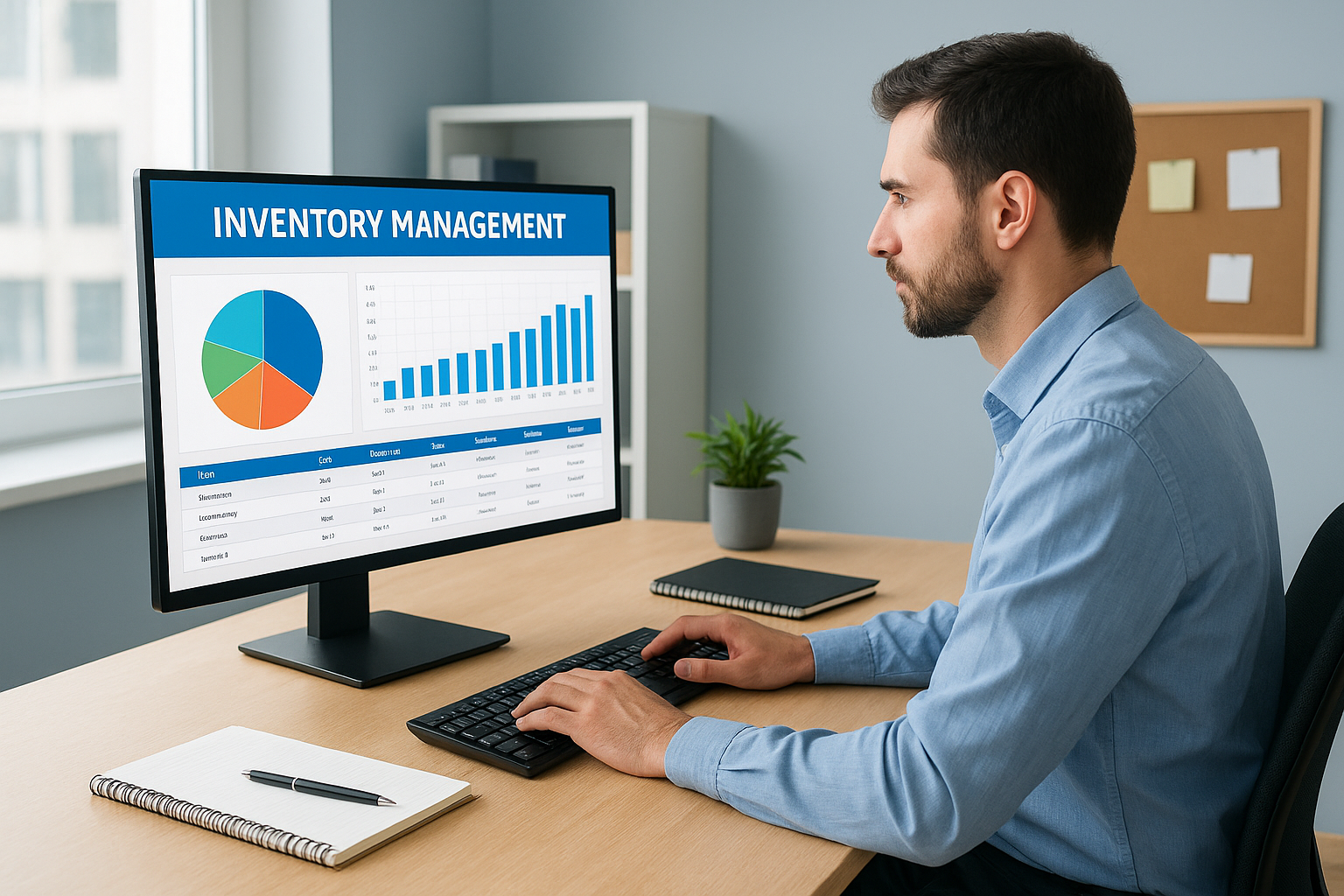
Your ERP system serves as the central repository for all inventory transactions, costs, and movements across your organization. Platforms like NetSuite and Acumatica provide comprehensive inventory management modules that handle receiving, storage, fulfillment, costing, and financial reporting within a single integrated database. This integration ensures your inventory balances automatically reconcile with your general ledger, eliminating manual data transfers and reducing accounting errors that plague companies using disconnected systems.
Modern ERP platforms support multi-location inventory tracking, lot and serial number control, bin management, and configurable cost accounting methods. You can track inventory across warehouses, retail stores, and third-party logistics providers while maintaining real-time visibility into stock levels and locations. Your finance team gets immediate access to inventory valuations, turnover metrics, and profitability analysis without waiting for month-end closing processes or manual spreadsheet consolidation.
Implementing inventory management in a properly configured ERP system eliminates the data silos and reconciliation headaches that consume finance team bandwidth in companies using multiple disconnected tools.
Specialized inventory optimization tools
Beyond your core ERP, you might deploy specialized software for advanced demand forecasting, warehouse management, or inventory optimization. These tools connect to your ERP through integrations, adding sophisticated capabilities like machine learning-based demand prediction, automated replenishment recommendations, or warehouse slotting optimization. Your decision to invest in these solutions depends on your inventory complexity, transaction volumes, and specific operational challenges.
Warehouse Management Systems (WMS) extend basic ERP inventory functionality with features like directed picking, wave planning, and labor management. You typically implement a WMS when your distribution operations reach a scale where optimizing warehouse efficiency generates measurable cost savings. Demand planning tools analyze historical patterns and external factors to generate more accurate forecasts than basic ERP statistical methods, helping you reduce safety stock while maintaining service levels.
Integration and automation capabilities
Your inventory management technology delivers maximum value when different systems share data seamlessly through API integrations or middleware platforms. You need to connect your ERP with e-commerce platforms, shipping carriers, suppliers, and customers to automate order processing, tracking updates, and replenishment triggers. These integrations eliminate manual data entry, reduce errors, and accelerate your cash conversion cycle by speeding up every transaction.
Look for inventory systems that support configurable automation rules for routine decisions like reorder point triggers, allocation prioritization, and inventory transfers between locations. You can program these rules to execute automatically based on your business logic, freeing your team to focus on exception management rather than processing routine transactions manually.
Common inventory problems and how to fix them
Even when you understand what is inventory management conceptually, executing it effectively requires addressing persistent challenges that plague midsized companies. These problems typically stem from inadequate systems, poorly defined processes, or organizational misalignment between departments. Your financial performance suffers directly when inventory issues go unresolved, as they create excess costs, lost sales, and inaccurate financial reporting. The good news is that most inventory problems follow predictable patterns with proven solutions that you can implement systematically.
Stockouts and overstocking
Balancing inventory levels represents the fundamental challenge in inventory management. Stockouts occur when you run out of products customers want to buy, directly costing you lost sales, damaged customer relationships, and erosion of market share to competitors. You might compensate by keeping excess safety stock, but then you face the opposite problem of overstocking that ties up working capital, increases carrying costs, and raises obsolescence risk as products sit in warehouses depreciating in value.
You fix this balance problem by implementing proper demand forecasting and replenishment systems in your ERP. Start by analyzing your sales history to identify demand patterns, seasonality, and growth trends for each product category. Set appropriate reorder points and safety stock levels based on supplier lead times and demand variability. Your finance team should review these parameters quarterly to ensure your inventory investment aligns with actual sales velocity and changing market conditions.
Inaccurate inventory records
System records that don’t match physical inventory create a cascade of operational and financial problems. Your picking team can’t find products the system says you have, customers receive incorrect items, and your financial statements report inventory values that don’t reflect reality. These discrepancies often stem from receiving errors, unreported damage or theft, incorrect picking and packing, or missing transaction entries when moving inventory between locations.
Regular cycle counting and root cause analysis help you identify where errors enter your system and implement controls that maintain inventory accuracy above 95%.
Implement a structured cycle counting program that audits high-value items frequently while checking lower-value products on a regular rotation. When you discover discrepancies, don’t just adjust the numbers. Investigate why the error occurred and fix the underlying process breakdown. Train your warehouse team on proper transaction recording, use barcode scanning to eliminate manual entry errors, and establish accountability for inventory accuracy at each stage from receiving through shipping.
Poor demand forecasting
Inaccurate demand forecasts create most of the stockout and overstock problems we’ve discussed. You either order too much inventory that sits unsold or too little that leaves you unable to fulfill customer orders. Many companies rely on intuition or simplistic forecasting models that fail to account for seasonality, market trends, or promotional impacts. Your purchasing team makes decisions based on flawed assumptions, and finance discovers the problem only during month-end closing when excess inventory or lost sales become apparent.
Fix forecasting problems by combining statistical methods with cross-functional input from sales, marketing, and operations teams. Your ERP system should analyze historical patterns while incorporating known future events like promotions, new product launches, or seasonal peaks. Review forecast accuracy monthly and refine your models based on actual results. Consider implementing collaborative planning processes where sales teams provide market intelligence that you layer onto statistical baselines for more reliable predictions.
How to improve inventory management in ERP projects
Improving inventory management through your ERP implementation requires more than just turning on software modules and hoping for the best. You need to approach the project with clear financial objectives tied to measurable outcomes like faster inventory turns, reduced carrying costs, or improved fulfillment accuracy. When you implement NetSuite or Acumatica without connecting inventory functionality to your actual business goals, you end up with a system that tracks inventory but doesn’t move the needle on operational performance or ROI. Understanding what is inventory management means recognizing it as a strategic financial function, not just an operational checklist.
Define requirements before configuration
You start by documenting your current inventory processes and identifying exactly where you’re losing money today. Map out your receiving workflows, storage procedures, picking methods, and inventory valuation approaches before you touch any ERP configuration screens. Your finance team should quantify the cost of current problems like shrinkage, obsolescence, carrying costs, and stockouts so you can prioritize which issues your new system must solve first.
Work with your implementation partner to translate these requirements into specific ERP capabilities you’ll activate and configure. Don’t just accept default settings because they’re easier to implement. Instead, configure lot tracking, serial number control, bin management, and costing methods to match your actual operational needs and accounting requirements. This upfront planning prevents expensive customizations later and ensures your system supports your inventory strategy from day one.
Build automation and controls into core processes
Configure your ERP to automate routine inventory decisions that currently consume staff time and create opportunities for errors. Set up reorder point triggers that automatically generate purchase requisitions when stock falls below defined thresholds. Implement allocation rules that prioritize customer orders based on your business logic, whether that’s first-come-first-served, customer tier, or profitability metrics.
When you automate standard inventory transactions and decisions in your ERP, you free your team to focus on exception handling and strategic analysis rather than processing routine paperwork.
Establish system controls that prevent common inventory mistakes. Configure inventory validation rules that flag unusual transactions for review, require manager approval for inventory adjustments above certain dollar amounts, and enforce cycle counting schedules. Your finance team should work with operations to define which controls protect accuracy without creating so much friction that users find workarounds.
Test with realistic scenarios and measure results
Before you go live, test your inventory configuration with realistic scenarios that reflect your actual business challenges. Run through complete order-to-cash cycles including receiving, putaway, picking, packing, and shipping to verify that transactions flow correctly and financial records update accurately. Test your month-end closing procedures to confirm inventory valuations calculate properly and reconcile to your general ledger.
Establish baseline metrics before implementation and track them rigorously afterward. Measure inventory accuracy, turnover rates, fill rates, and carrying costs monthly to verify your ERP investment delivers the financial improvements you projected in your business case. When metrics don’t improve as expected, investigate whether you need additional training, process refinement, or system configuration changes to achieve your ROI targets.
Key takeaways
Understanding what is inventory management gives you the foundation to transform one of your largest balance sheet investments into a strategic advantage. You now know that effective inventory management extends far beyond tracking quantities. It requires coordinating demand forecasting, operational processes, valuation methods, and supporting technology to deliver measurable financial outcomes like faster cash conversion, higher margins, and improved working capital efficiency.
Your inventory management approach directly determines whether you maintain healthy cash flow or constantly battle working capital constraints. The right combination of ERP capabilities, defined processes, and performance metrics helps you balance customer service requirements against capital efficiency goals. You can achieve optimal inventory levels that support growth without tying up excessive capital in excess stock.
Finance leaders implementing or rescuing ERP systems need partners who understand both the technology configuration and financial impact of inventory decisions. Concentrus helps CFOs at midsized companies implement NetSuite and Acumatica with proven methodologies that guarantee ROI by connecting every inventory process to measurable business outcomes.